
Global register of fatalities at sea: Experimental data collection
Information document prepared for the fifth meeting of the Special Tripartite Committee (7–11 April 2025)
The role of communication and dissemination in fulfilling the potential of gender-relevant work statistics
The foundational resolution adopted in 2013 by the 19th International Conference of Labour Statisticians introduced a forms-of-work framework with five forms of work (own-use production work, employment, unpaid trainee work, volunteer work, and other work activities) and new measures of labour underutilization, greatly increasing the gender relevance and the analytical value of labour statistics. However, the full potential of these new standards is only fulfilled if countries implement them in their data collection activities via robust gender-sensitive methods and communicate effectively the results. This short paper summarizes the rationale and benefits the new standards, highlighting key methodological and operational issues pertaining to their implementation, with an emphasis on the standards’ impact in improving the gender relevance of work statistics. It also briefly discusses the role of effective communication and dissemination in fulfilling the potential of gender-relevant work statistics.
Women and the economy: 30 years after the Beijing Declaration

Promoting the use of administrative data sources for international labour migration statistics in Türkiye
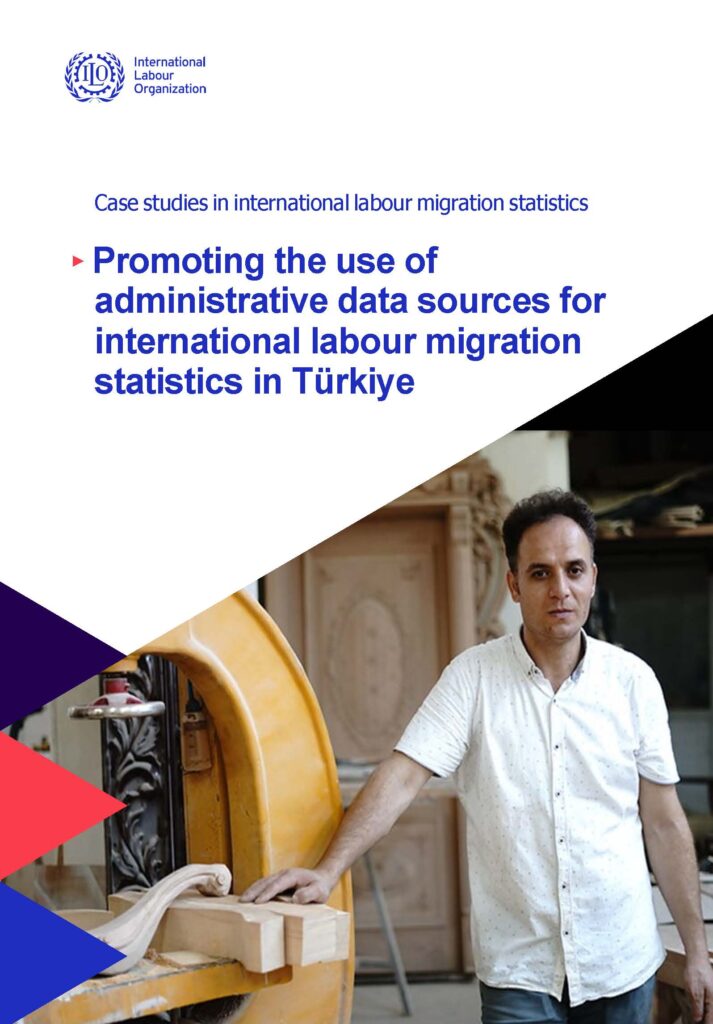
This case study highlights Türkiye’s use of national frameworks for leveraging administrative data to generate labour statistics on international migrants. It also contributes to revising the 2018 ICLS Guidelines.
ILO global estimates on international migrants in the labour force
The report offers a thorough analysis of international migrants’ participation in the global labour force. It addresses key challenges while providing regional estimates highlighting the diverse dynamics of labour migration.
Constant turbulence: employment in civil aviation

The aviation sector has continuously evolved over the years, shaped by both long-term developments and short-term shocks. Data insights from the ILO suggest that the sector is characterized by ‘turbulence’ brought about by highly fluctuating levels and a shifting structure of employment, persistent gender imbalances, and other decent work challenges, all of which are linked to the cyclical and competitive nature of the industry.
ILO sectoral meetings
ILO Sectoral Policies Department (SECTOR)
The impact of care responsibilities on women’s labour force participation

This brief provides a detailed overview and analysis of the new ILO global and regional estimates of persons outside the labour force due to care responsibilities.
How the latest statistical standards improve knowledge about rural women’s work

Latest statistical standards improve our knowledge of the challenges and decent work deficits that women in rural areas face. Such knowledge is key to formulating effective policies that foster the women’s potential for growth and development.