
ILO data highlights need for disability disaggregated labour force surveys and investment in data systems

Data on labour market disparities between persons with and without disabilities are essential to inform transformative policymaking and programming. Yet, analysis of ILOSTAT datasets reveal that many countries do not collect population-level data on disability status, hampering efforts to disaggregate labour market indicators. Investment in national data systems is needed to advance disability inclusion. This blog focuses on Africa, where we see progress toward more inclusive data systems in many countries, but gaps remain.
Assessing the current state of the global labour market: implications for achieving the Global Goals

The Sustainable Development Goals (SDGs) are a set of 17 global goals to end poverty, protect the planet, and ensure prosperity for all. But with the COVID-19 pandemic upending the global labour market in recent years, progress towards achieving these goals has been disrupted. From rising unemployment and informal work to slowing productivity growth and persistent gender inequalities, the pandemic has highlighted the need for urgent action to build a more resilient and equitable world of work.
New data shine light on gender gaps in the labour market
A new indicator developed by the ILO finds that women’s access to employment, working conditions and pay gap have barely improved in the past two decades.
LFS questionnaire viewer
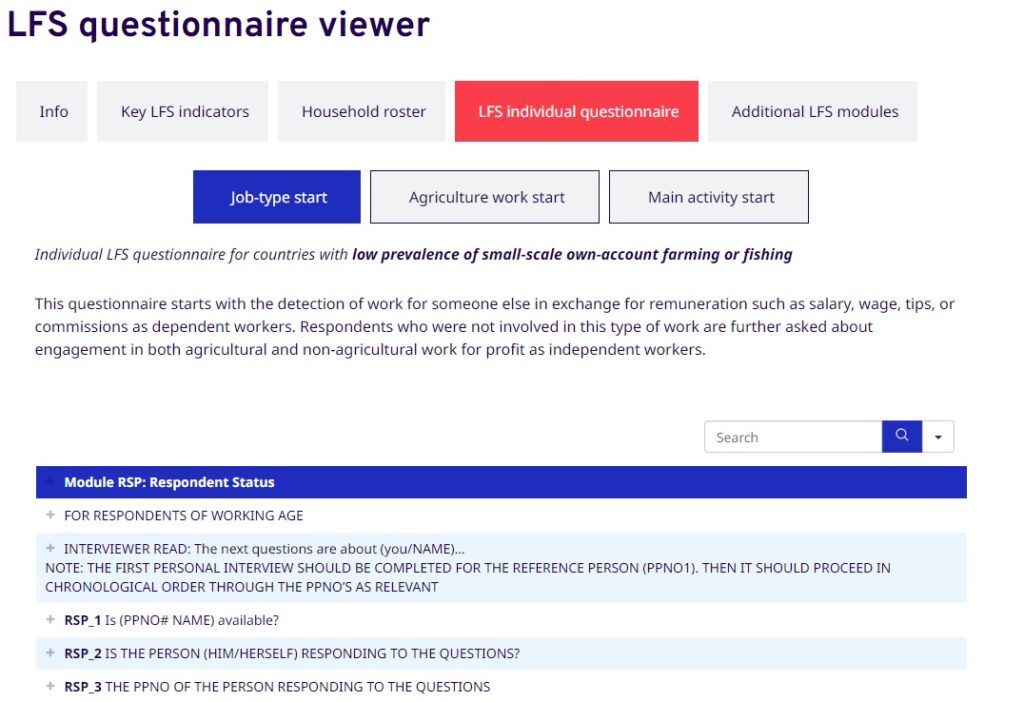
This viewer allows users to take a close look at questions in the ILO model LFS questionnaires for PAPI.
ILO modelled estimates methodological overview

The ILO modelled estimates series provides a complete set of internationally comparable labour statistics, including both nationally reported observations and imputed data for countries with missing data. The imputations are produced through a series of econometric models maintained by the ILO. This document describes the methodology of the series.
Contribution of the forest sector to total employment in national economies – Estimating the number of people employed in the forest sector

This study employs a new method to fill the gaps of missing data points in order to provide sound total employment estimates in the forest sector on a global scale.
Forest sector employs 33 million around the world, according to new global estimates
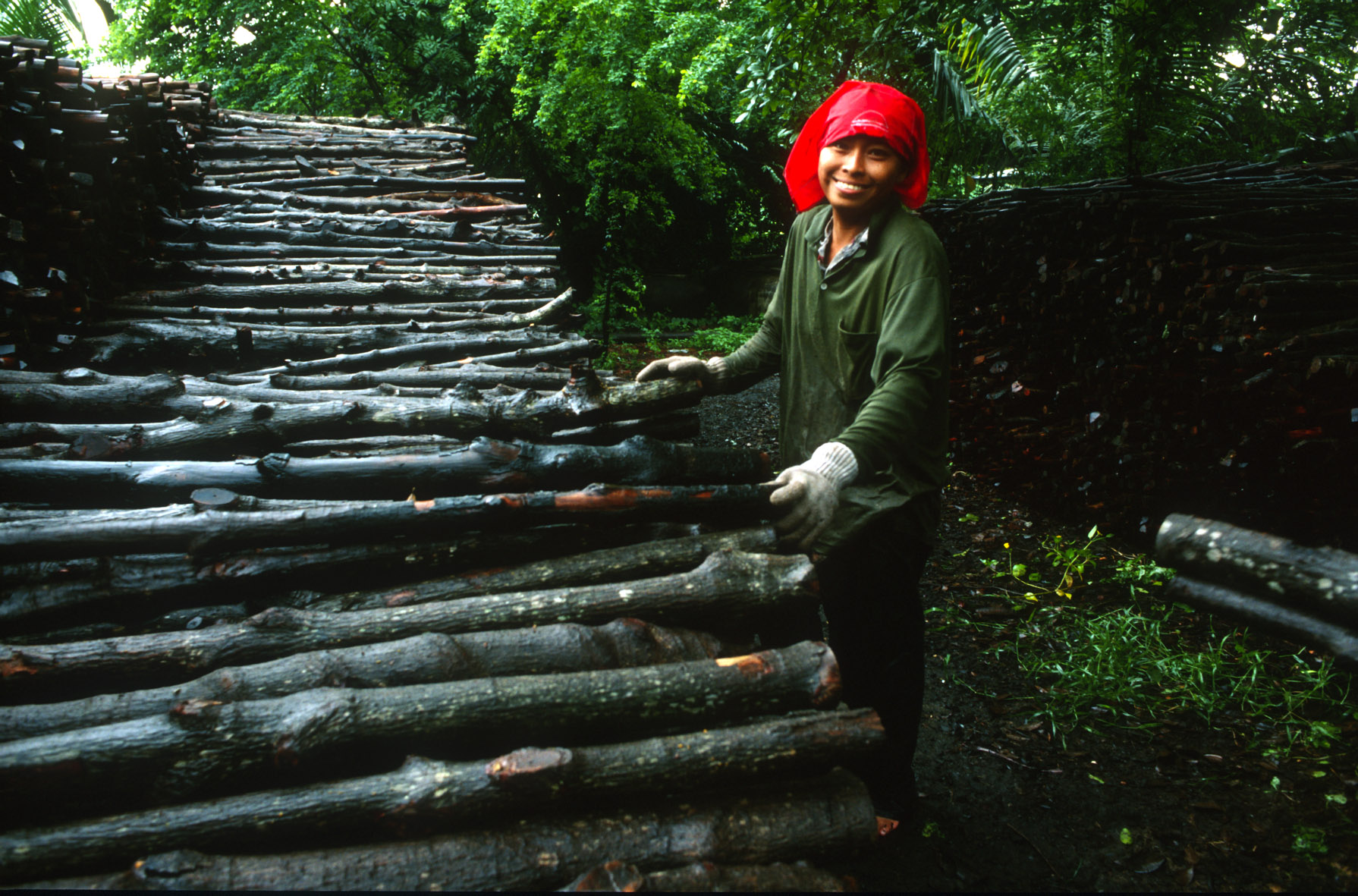
Quantifying how many people are employed in the forest sector is not a straightforward exercise. Nonetheless, the ILO, FAO and the Thünen-Institute of Forestry joined forces to estimate the global workforce in forest-related activities and provide insights on labour market trends in this sector.
Engendering informality statistics: gaps and opportunities
This working paper explores the demand for gender data on informality and the measurement challenges faced, and highlights the opportunities emerging from the revision of statistical standards on informality that are set to be adopted in 2023.
Global Wage Report 2022-23: The impact of inflation and COVID-19 on wages and purchasing power

This ILO flagship report examines the evolution of real wages, giving a unique picture of wage trends globally and by region.
Worker and sector profiles (PROFILES database)

Concise description of concepts and definitions, uses, sources and limitations of indicators in the Worker and Sector Profiles, including definitions for the groups of occupations and/or sectors recombined to create these profiles.