
Statistical Methodology Series 9 – Engendering informality project
The report provides an overview of the labour force survey pilot studies carried out by the ILO Department of Statistics in Uganda and Peru under the Engendering Informality Statistics project funded by the Bill & Melinda Gates Foundation. The main activity of the project was to test statistical concepts and measurement approaches in household survey questionnaires to generate evidence on what works when collecting data with a gender lens.
Own-use provision of services: Measurement guide

This guide provides guidance on implementing the ILO add-on module for own-use provision of services (OPS) in national labour force surveys. It is aimed at low- and middle-income countries and is designed to support NSOs to produce statistics on OPS when resource constraints or other considerations impede an independent time-use survey.
New standards, increased visibility: improving measurement of the informal economy
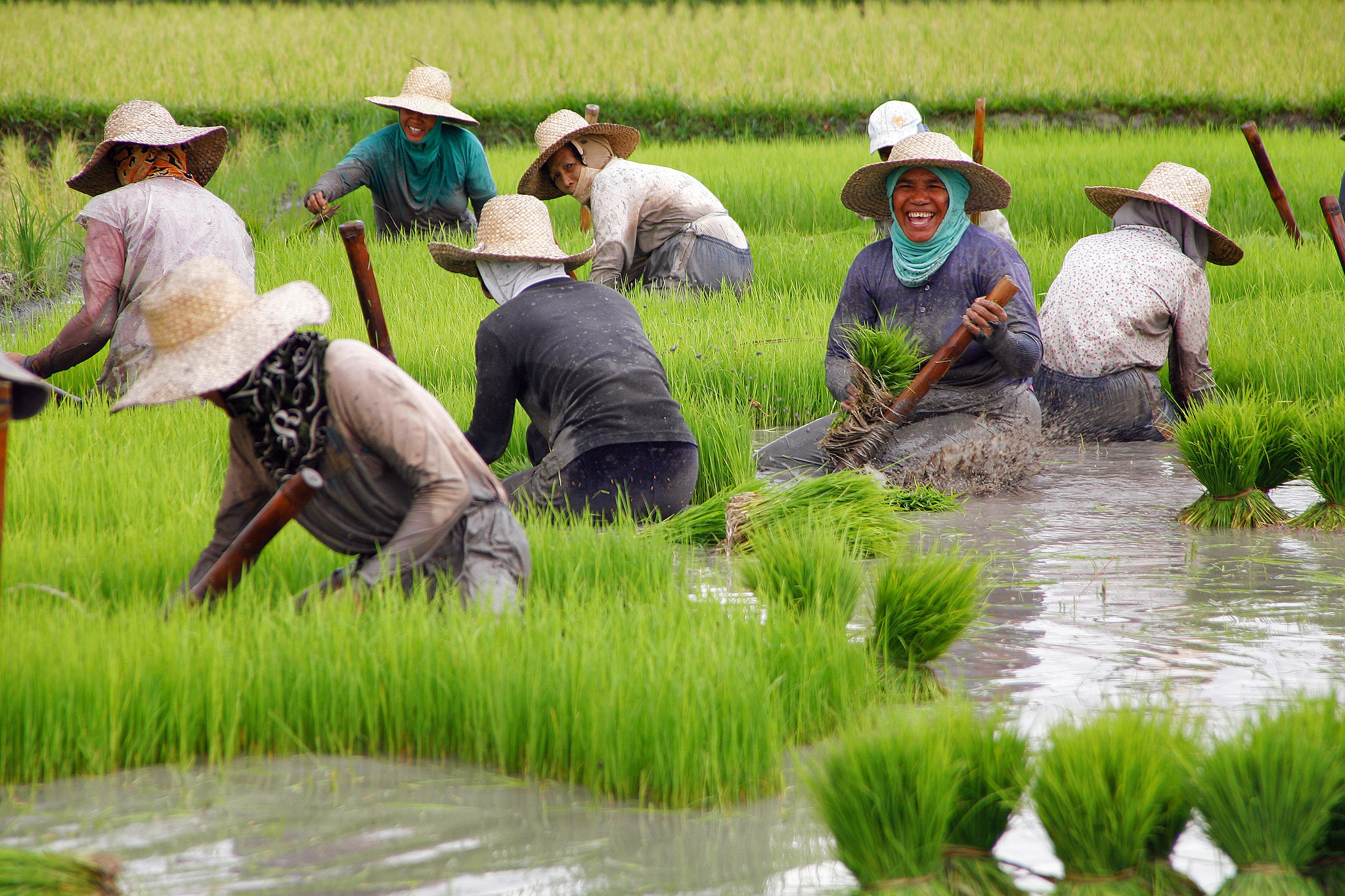
New statistical standards will improve the measurement of the informal economy, providing more useful and complete data to address informality through targeted policies.
LFS questionnaire viewer
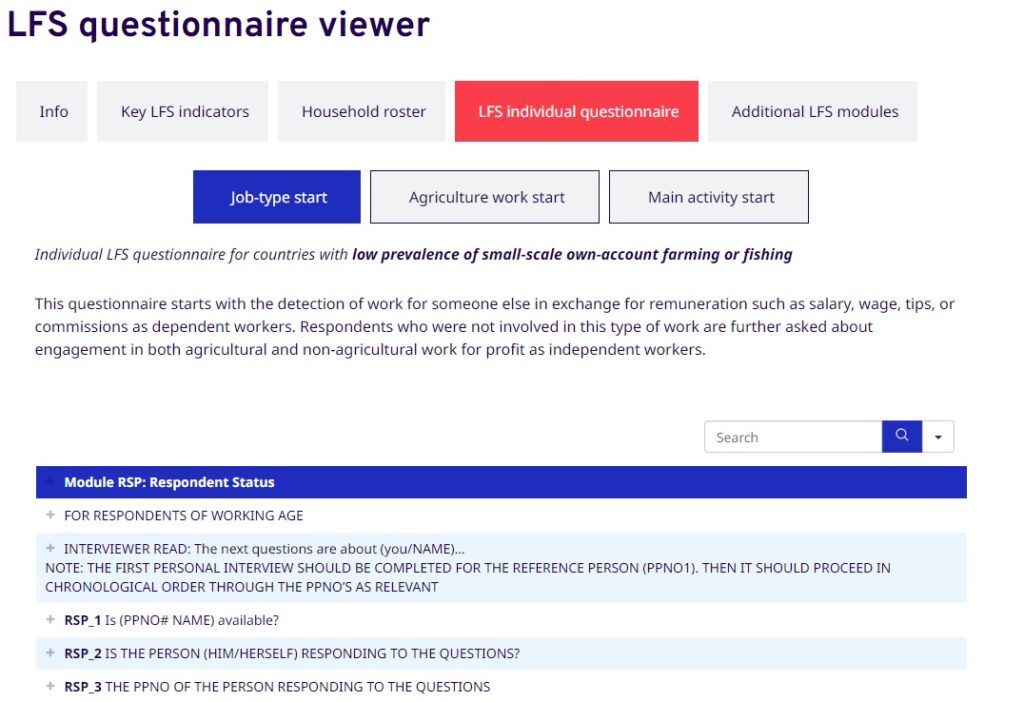
This viewer allows users to take a close look at questions in the ILO model LFS questionnaires for PAPI.
Quick guide to understanding the impact of the new statistical standards on ILOSTAT databases
This quick guide explains the differences between the 13th and 19th ICLS standards, the impact of the revisions on headline indicators, and how the ILO handles this on ILOSTAT.
New ILO database updates work-related indicators to meet latest standards
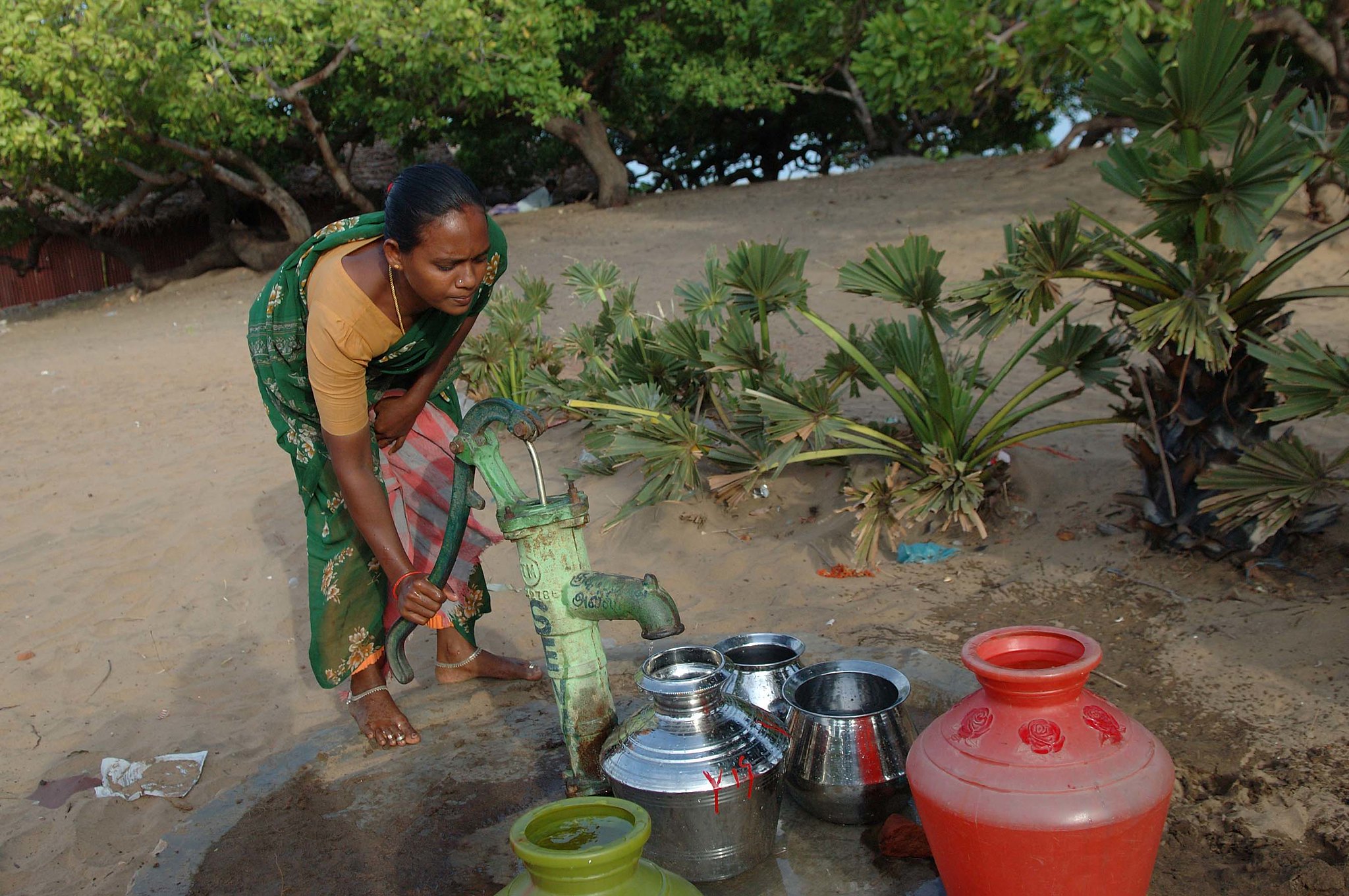
The framework on work statistics has been widely publicized over the years, particularly to data producers and policymakers, as it was designed to improve labour market and gender analysis. But little has been said to data users interested in international comparisons. Until now. Here is the ILOSTAT solution to handling the impacts of revised definitions occurring on different schedules across the globe.
What to know when comparing data on women and men’s work
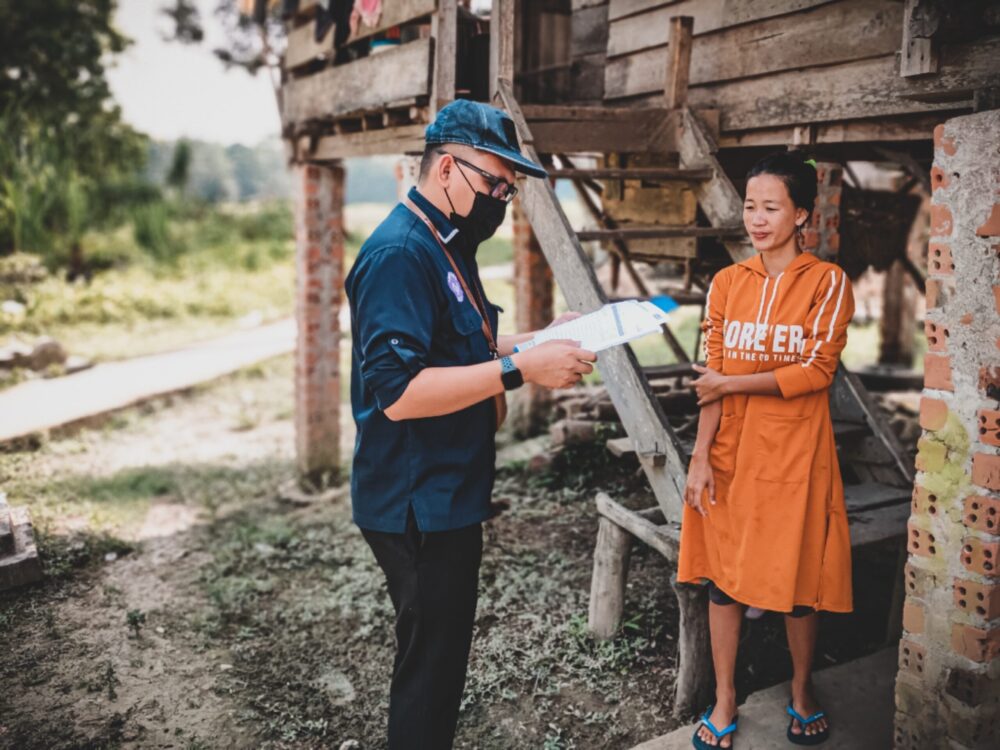
How many men and women were employed last week? How many hours did they work in their main jobs? And how many hours did they work in unpaid activities such as caring for children? These are seemingly straightforward questions but measuring paid and unpaid work through household surveys is anything but straightforward. This holds true especially for women in developing countries, who are more often engaged in informal activities such as microenterprises or small-scale farming — activities that can fall through the cracks of traditional surveys.
Global review of impacts of the COVID-19 pandemic on labour force surveys and dissemination of labour market statistics

In March 2021, the ILO undertook a global survey of national data producers to understand the impacts of the pandemic on their statistical operations particularly in the domain of labour statistics.
Keeping labour data flowing during the COVID-19 pandemic
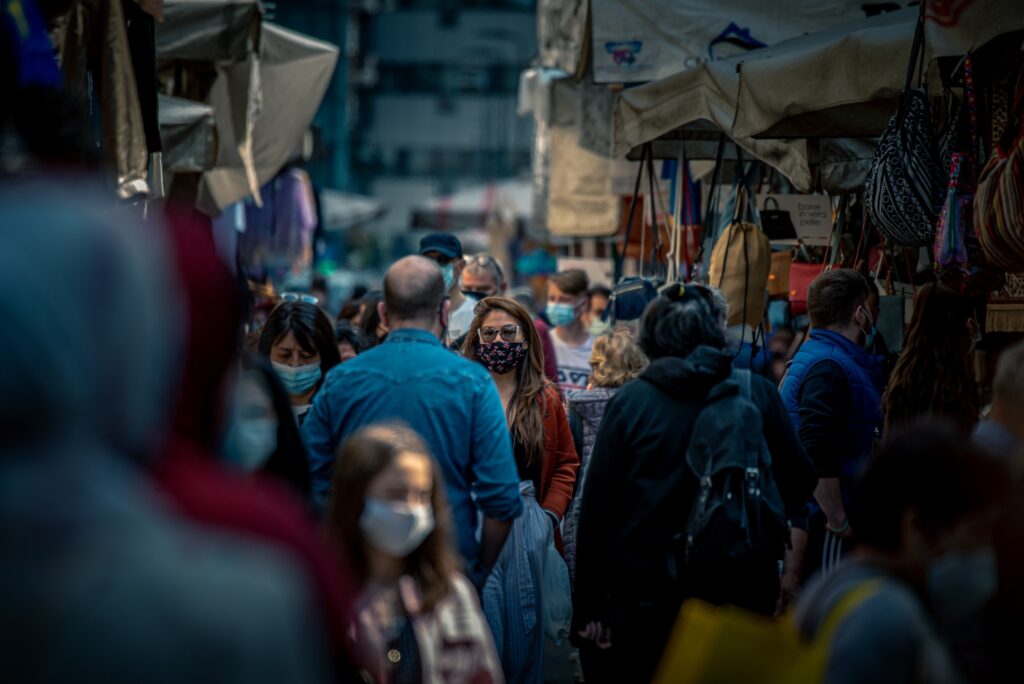
Losing the ability to collect data may not be one of the more obvious negative effects of the COVID-19 pandemic. However, nearly all countries in the world found it difficult to gather data precisely when demand was highest. A recent global survey by the ILO has highlighted just how great the impact was on the production of labour statistics and how countries responded to meet user needs for data.
Lessons from the pandemic: building better gender data for the future
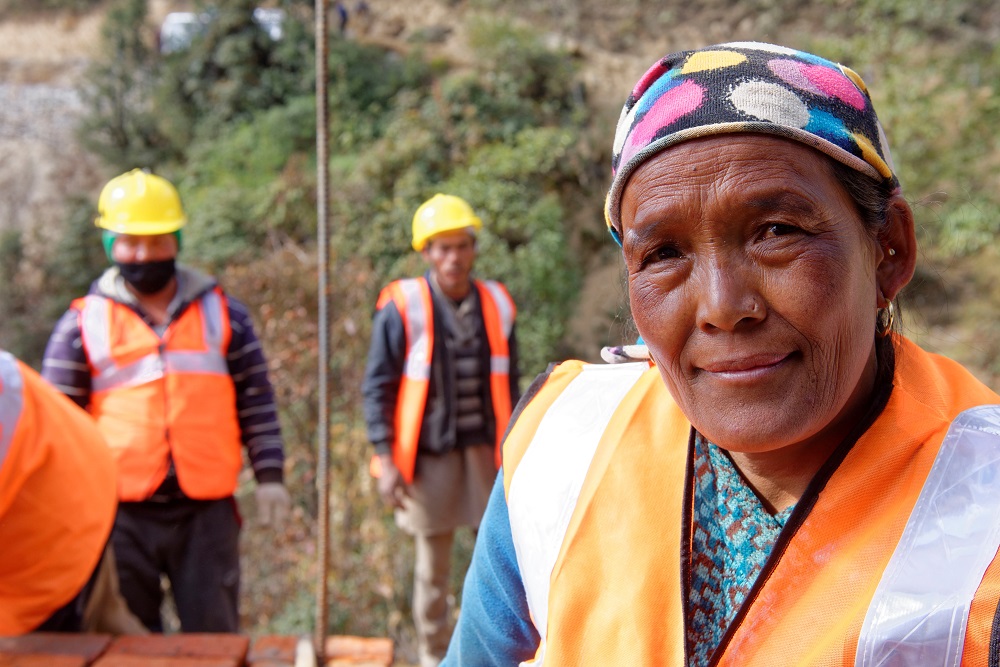
The COVID-19 pandemic has laid bare not only inequalities in the world of work, including between women and men, but it has also further emphasised the gender data gaps that hamper our understanding of the depth, nature and evolution of those inequalities.