
Guidance to data producers to maintain labour force survey data collection
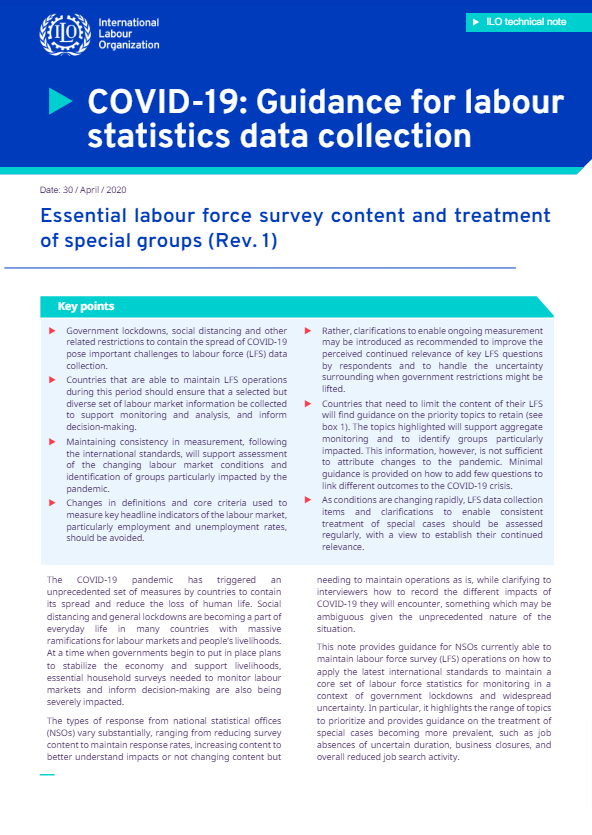
The most immediate impact of the pandemic on LFS data collection for most countries is the suspension of face-to-face interviewing. This note provides guidance to countries on the range of options available and challenges to deal with in order to change their data collection approach and maintain continuity in data availability.
COVID-19 Guidance for labour statistics data collection: Consumer Price Indexes
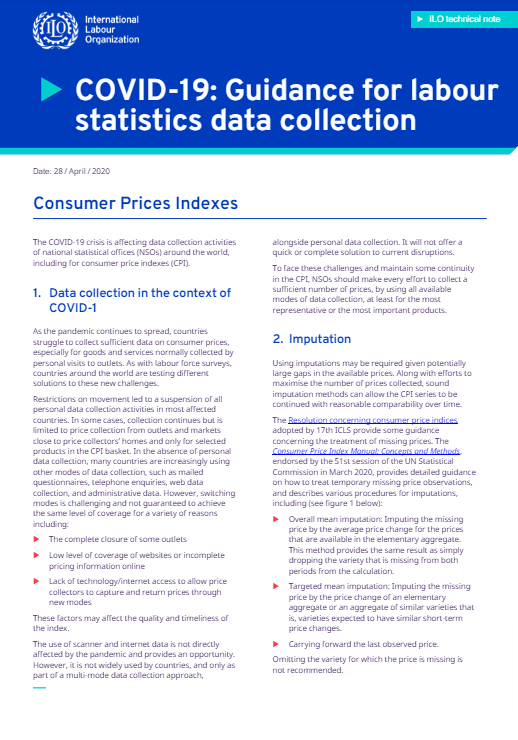
The COVID-19 crisis is affecting data collection activities of national statistical offices (NSOs) around the world, including for consumer price indexes (CPI).
Will COVID-19 impair the availability and quality of labour statistics?

The pandemic is radically impacting our lives. But what about the statistics used to assess those impacts? Without timely and accurate information, we will not act through adequate and informed policies. Though numbers should focus on the health of the population, we also need to understand what is happening in the domain of labour statistics. That is, how is COVID-19 affecting our working lives? What is less obvious, however, is that the pandemic is also affecting our ability to compile such statistics.
Essential labour force survey content and treatment of special groups
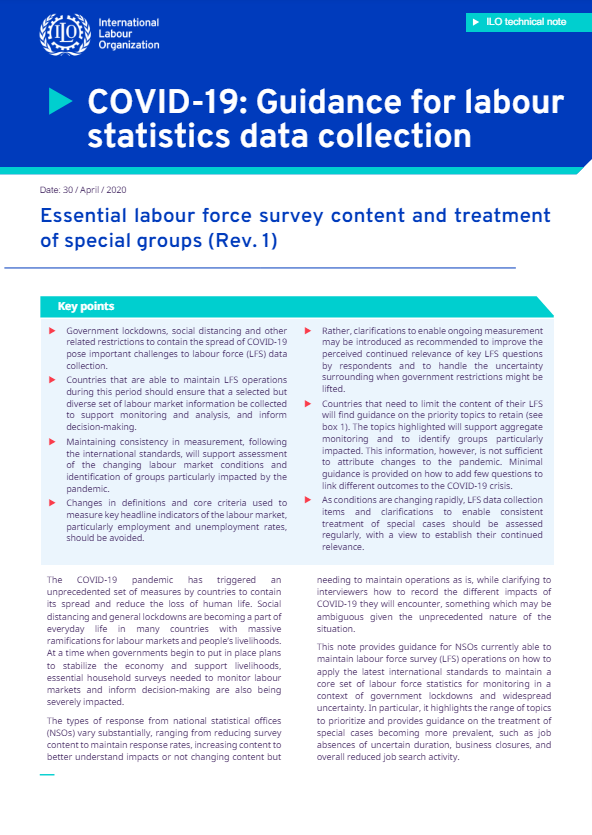
International standards are still sound reference, but due to this unprecedented pandemic, this note provides guidance to data producers to maintain labour force survey (LFS) operations. It highlights the range of topics to prioritize in national LFS and suggested clarifications to support consistent treatment of special cases becoming more prevalent, such as job absences of uncertain duration, business closures, and overall reduced job search activity.
COVID-19

This page discusses the impact of the pandemic on labour markets and the collection of labour statistics. It features guidance for data producers.
Guidebook on how and why to collect and use data on industrial relations

This guidebook is intended to support ILO’s tripartite constituents in the collection of data on industrial relations, including on trade union membership, on the coverage of collective bargaining agreements and on strikes and lockouts.
Gender Equality and Non-Discrimination Indicators (GEND database)

Concise description of concepts and definitions, uses, sources and limitations for indicators by household type, including presence and number of children.
Measuring job quality: difficult but necessary

The quality of our job determines to a great extent our well-being and life quality, but measuring it requires taking into account numerous aspects of our working conditions.
Sources and Methods Volume 9: International labour migration (2020)

This volume presents the sources and methods used in the compilation of international labour migration statistics, based on the ILO metadata survey conducted in 2015-2016 in ILO Member countries and territories.
ILO Model question on volunteer work for Population and Housing Censuses
This model question is suitable for inclusion in a census form to capture participation in volunteer work, aligned with the latest standards adopted by the ICLS.