The leading source of labour statistics

Labour Market Information Systems (LMIS)

22–26 June 2026

ITC (Turin, Italy)

A Labour Market Information System (LMIS) is “a network of institutions, persons and information that have mutually recognized roles, agreements, and functions with respect to the production, storage, dissemination, and use of labour market-related information and results in order to maximise the potential for relevant and applicable policy and programme formulation and implementation.”

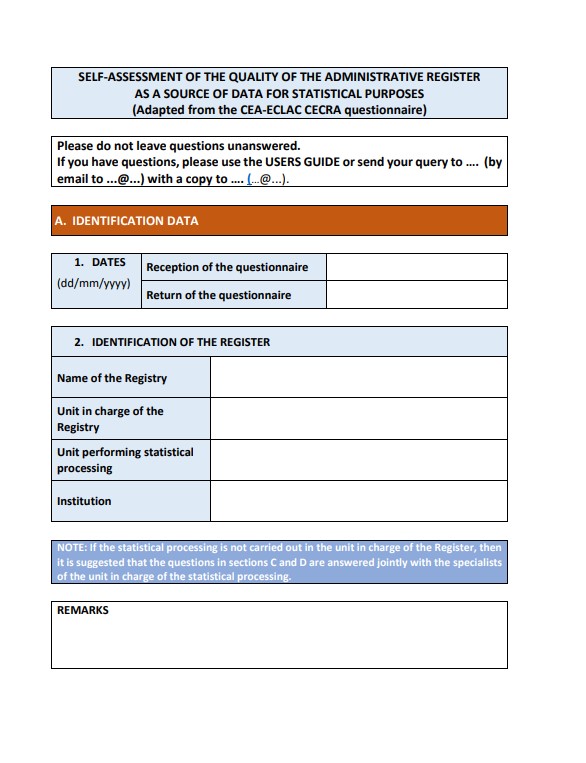
Questionnaire for Self-Assessment of the Quality of Administrative Records (SAQUAR)

Questionnaire for Self-Assessment of the Quality of Administrative Records (SAQUAR)

This questionnaire, which is an adaptation of the Questionnaire for Evaluating the Quality of Administrative Records (CECRA, for its initials in Spanish) recommended by the Working Group on Administrative Records in the framework of the Statistical Conference of the Americas and coordinated by ECLAC, is a tool to assess the quality of administrative records for their potential use for labour statistics purposes.

User Guide for the Questionnaire for Self-Assessment of the Quality of Administrative Records (SAQUAR)

User Guide for the Questionnaire for Self-Assessment of the Quality of Administrative Records (SAQUAR)

This user guide provides tips and clarifications for the completion of the Self-Assessment of the Quality of Administrative Records (SAQUAR) form, an adaptation of the Questionnaire for Evaluating the Quality of Administrative Records (CECRA, for its initials in Spanish) recommended by the Working Group on Administrative Records in the framework of the Statistical Conference of the Americas and coordinated by ECLAC.

LMIS Brief Description and ILO Toolkit

This document provides a comprehensive overview of the LMIS, delving deep into its functionality, components, and the implementation framework developed by the Office for its development at a national or regional level.

Calendar

See the upcoming schedule for major events, training and workshops in labour statistics.

Skip to content