
Digital labour platforms: Number of platforms and workers
This brief examines the growth of digital labour platforms and provides updated estimates on the number of active platforms and workers engaged through them. It highlights persistent measurement gaps and underscores the need for internationally agreed statistical standards to improve comparability and inform policy.
ILO global estimates on international migrants in the labour force: Figures at a glance
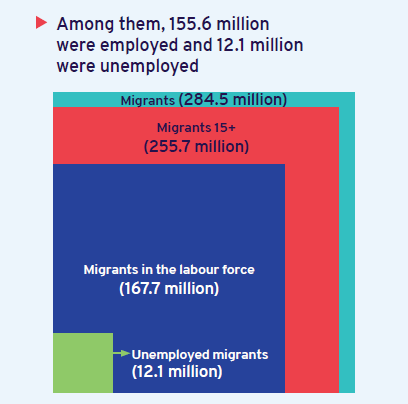
See the headline results from the latest edition of the ILO modelled estimates for a quick overview of global and regional findings.
Estimation methodology – ILO Modelled Estimates of International Migrants in the Labour Force
This note presents an overview of the technical foundations of the estimation methodology. It describes the models used, outlines the sources of input data and summarizes the approaches applied to assess the quality of the estimates. Where available, data based on foreign-born population as international migrants were used as input in the models.
Global Compact for Safe, Orderly and Regular Migration (GCM)
SIMPOC
UN Handbooks on household surveys
New global estimates reveal that 2.1 billion people volunteer monthly
The latest global estimates challenge the idea that volunteering only happens through organisations and demonstrates the impact of everyday, informal, and unpaid civic action worldwide.
Employment and Social Trends 2026

This report examines the state of global labour markets, highlighting stable headline employment alongside stalled progress in job quality and widening inequalities. The report analyses productivity, demographic and economic pressures shaping work in the year ahead and outlines the challenges to achieving more inclusive growth.
Everyday helpers: What new data reveal about trends in direct volunteering
Information from eight countries reveals direct, person-to-person help to be the world’s most common—and least visible—form of volunteering.
Labour Market Statistics and Analysis Academy

23 November–4 December 2026
Turin, Italy
The main objective of the Academy is to better equip and situate national and international stakeholders in the new SDG statistical monitoring system in the context of the main outcomes of the 20th and 21st ICLS recommendations.