
Measuring progress on labour rights

Sustainable Development Goal indicator 8.8.2 sheds light on the state of freedom of association and the effective recognition of the right to collective bargaining
The right to occupational safety and health: Still unrealized

On this World Day for Safety and Health at Work, we analyse the remaining gap to realize this fundamental right.
Measuring informality
27 April–22 May 2026
Online (ITC E-Campus)
The course is designed for participants to better understand the functioning of the informal economy and the measurement of informality.
The role of communication and dissemination in fulfilling the potential of gender-relevant work statistics
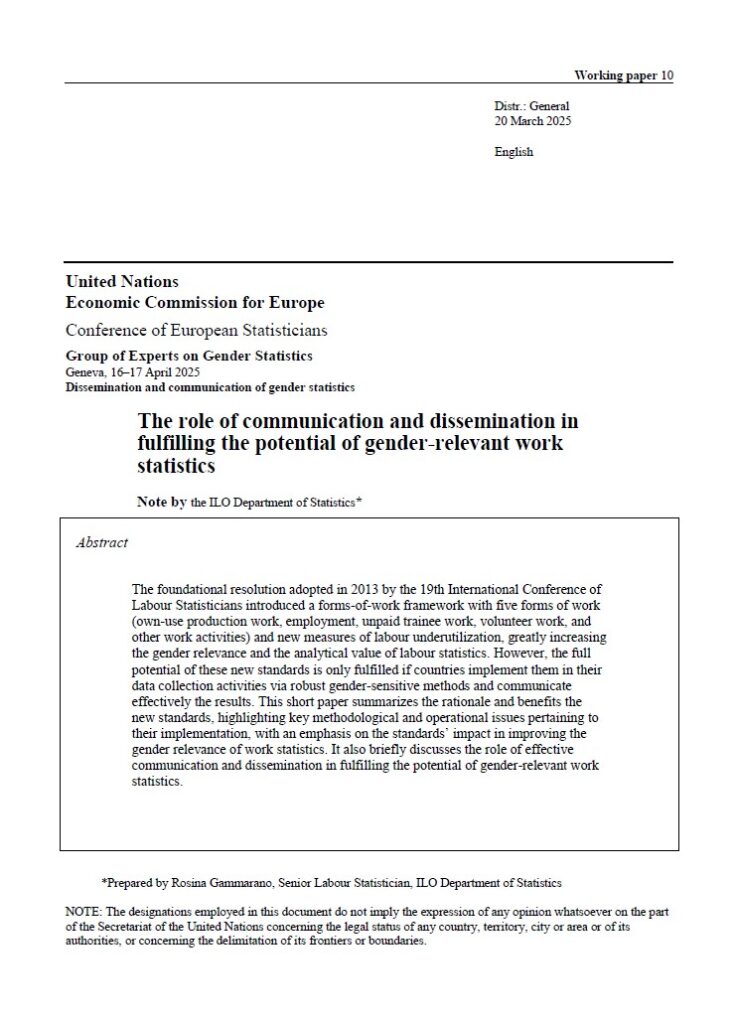
The 2013 ICLS resolution introduced a new forms-of-work framework and labour underutilization measures that significantly strengthened the gender relevance of labour statistics. This paper examines the rationale behind these standards, key challenges in their implementation, and the role of communication in maximizing their impact.
Visualization tool on the impact of latest statistical standards
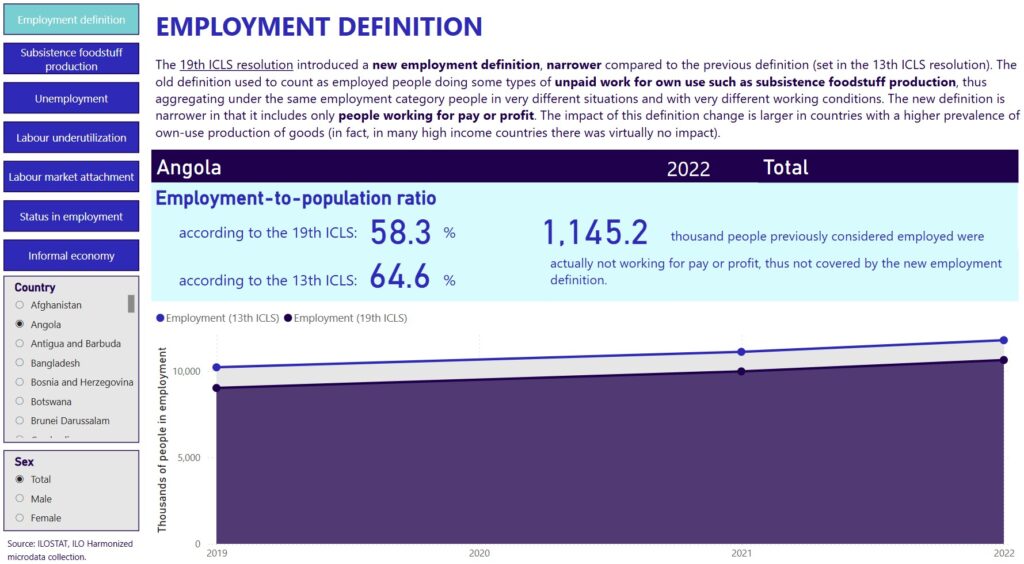
This interactive visualization tool shows the impact of the latest statistical standards across a range of work-related topics, highlighting the increased analytical value of statistics.
Measuring skills mismatches

23 March–17 April 2026
Online (ITC E-Campus)
The course is designed to enhance capacities to identify, collect, analyse and disseminate labour market information related to skills imbalances from both the demand supply side.
Happiness: a key metric to understanding decent work

On the International Day of Happiness, we underscore the importance of integrating happiness measurement into our understanding of decent work and the wellbeing of workers, employers, and societies.
Women and the economy: 30 years after the Beijing Declaration

Main sources of work statistics – Strengths and limitations

This table summarizes the strengths and limitations of the main sources of work statistics, namely household surveys (such as labour force surveys), population and housing censuses, establishment surveys, administrative registers, big data, and national accounts.
Checklist for 19th ICLS standards application

This checklist provides a simple way of verifying that all conditions required to consider the standards adopted by the 19th International Conference of Labour Statisticians (ICLS) as fully applied in a given data collection activity are met.