
The global labour income share and distribution: Key findings
The global labour income distribution is lopsided: a worker in the top 10% earns US$7,445 (PPP) per month, a worker in the bottom 10% earns just US$22.
The declining labour income share

The labour income share is a key inequality measure, and an SDG indicator. The share of total income benefiting workers is declining globally.
The working poor – or how a job is no guarantee of decent living conditions

This slideshow presents the main results of a study based on ILO’s global estimates of employment by economic class (including the working poverty rate) featured in our latest issue of Spotlight on Work Statistics.
The working poor… or how a job is no guarantee of decent living conditions
This issue of ILOSTAT’s Spotlight on work statistics focuses on employed people living in extreme poverty around the world. Using ILO’s global estimates of employment by economic class, it shows the great progress achieved during the last few decades in reducing working poverty in the world, and how more effort is still needed to completely eradicate it, particularly considering the strong regional disparities.
Labour market access – a persistent challenge for youth around the world

The fifth issue of our series Spotlight on work statistics uses the first ever global estimates of youth not in employment, education or training along with other youth labour market indicators to explore the situation of youth in labour markets around the world, and unveil the additional challenges they face.
Labour market access – a persistent challenge for youth around the world
The fifth issue of our series Spotlight on work statistics uses the first ever global estimates of youth not in employment, education or training along with other youth labour market indicators to explore the situation of youth in labour markets around the world, and unveil the additional challenges they face.
Blog

Learn about the latest labour statistics trends using ILOSTAT data and get insights into methodological issues.
Analytical publications

Find selected publications featuring ILOSTAT data.
Avoiding unemployment is not enough

Discover the patterns around the world of unemployment and other forms of labour underutilization, including time-related underemployment, the potential labour force and over-education in Avoiding unemployment is not enough, the fourth issue of our series Spotlight on work statistics.
International labour migration statistics in South Asia: Establishing a subregional database and improving data collection for evidence-based policy-making
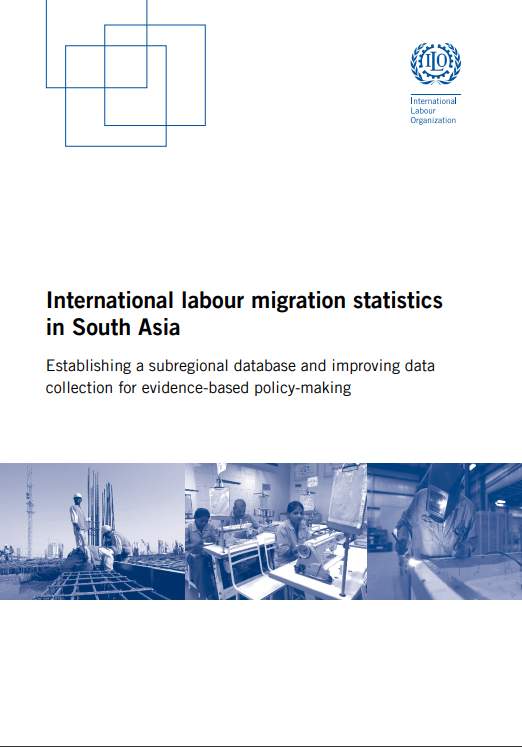
This report provides a comprehensive analysis of statistics related to extraregional labour migration of South Asian nationals, referring to those migrating outside of the subregion from the following eight countries: Afghanistan, Bangladesh, Bhutan, India, Maldives, Nepal, Pakistan and Sri Lanka. Where applicable and relevant to the statistical discussion, this report also includes conversations on developments and trends in extraregional labour migration, migrant worker attributes (such as sex, skill level, occupation, country of destination, method of recruitment and more) and associated thematic areas (such as remittances) in South Asia.