
Note on the implementation of 19th, 20th and 21st ICLS standards
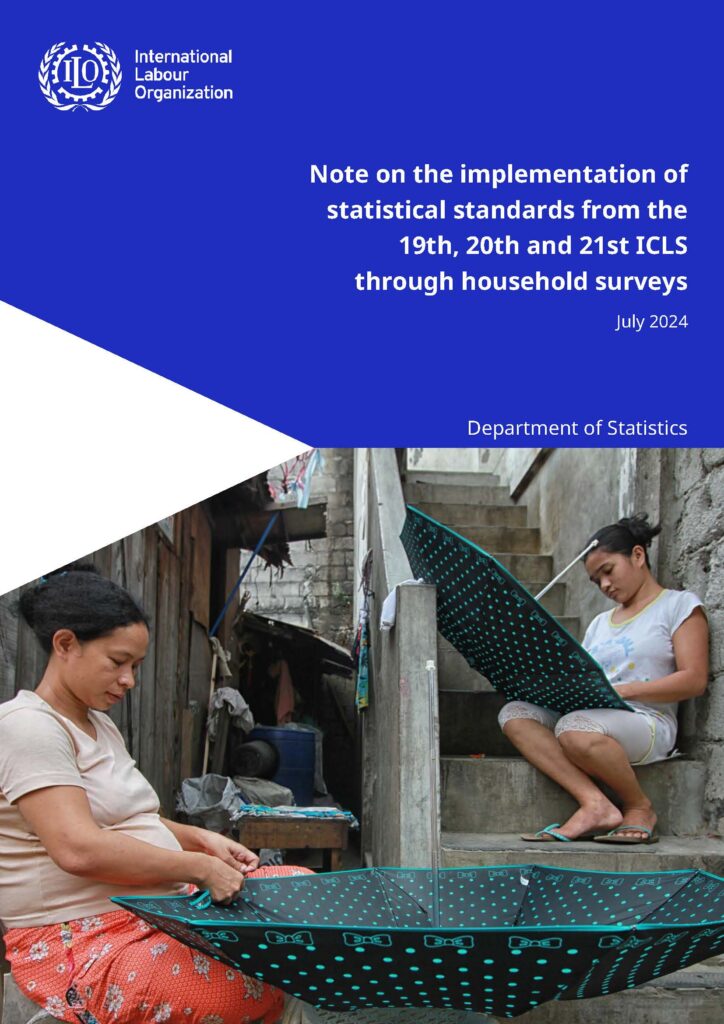
This note provides an overview of the requirements to apply the latest statistical standards through household surveys.
Making labour statistics work for women: recent developments and the way ahead
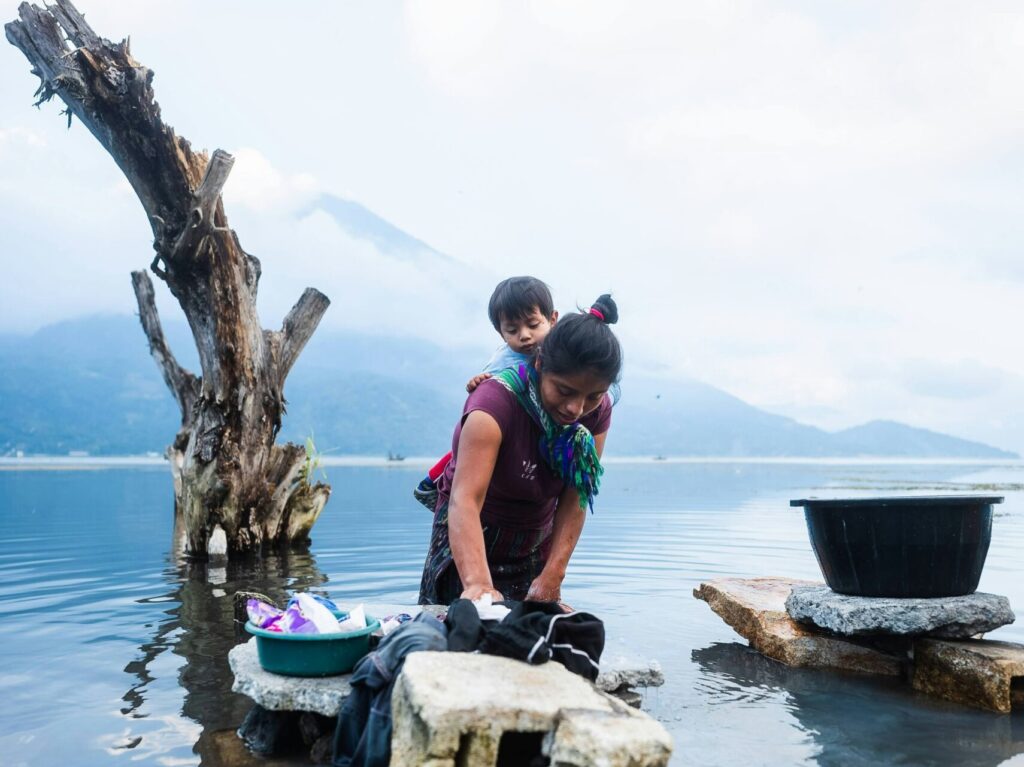
In this blog, we highlight key developments which have greatly enhanced the visibility of women’s work within labour statistics, and the relevance of labour statistics to women’s work, making for a much more complete view of the world of work.
ILOSTAT StaRS
Statistical Methodology Series 11 – Identification of informality through labour force surveys
Statistical Methodology Series 10 – Identification of ICSE-18 through labour force surveys
This report illustrates Key findings and implications for questionnaire design obtained from the pilot studies carried out by the ILO in Uganda and Peru in relation to the identification of status in employment based on the International Classification of Status in Employment (ICSE-18). Working relationships are inextricably linked to – and have direct implications for – the identification and measurement of informality. Thus, ensuring both are measured well is key to improving our understanding of informality.
Statistical Methodology Series 9 – Engendering informality project
The report provides an overview of the labour force survey pilot studies carried out by the ILO Department of Statistics in Uganda and Peru under the Engendering Informality Statistics project funded by the Bill & Melinda Gates Foundation. The main activity of the project was to test statistical concepts and measurement approaches in household survey questionnaires to generate evidence on what works when collecting data with a gender lens.
Own-use provision of services: Measurement guide

This guide provides guidance on implementing the ILO add-on module for own-use provision of services (OPS) in national labour force surveys. It is aimed at low- and middle-income countries and is designed to support NSOs to produce statistics on OPS when resource constraints or other considerations impede an independent time-use survey.
New standards, increased visibility: improving measurement of the informal economy
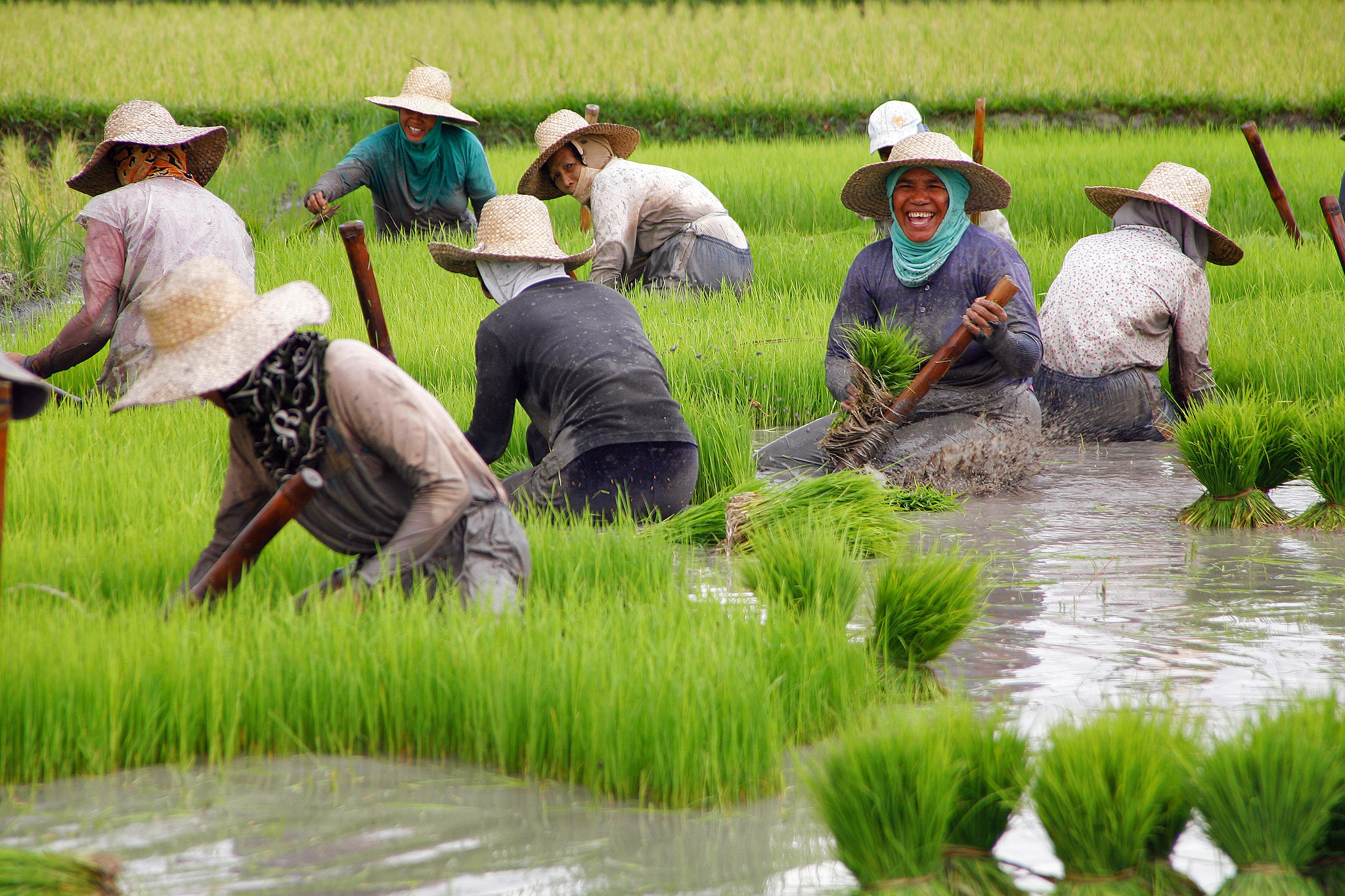
New statistical standards will improve the measurement of the informal economy, providing more useful and complete data to address informality through targeted policies.
Quick guide to understanding the impact of the new statistical standards on ILOSTAT databases
This quick guide explains the differences between the 13th and 19th ICLS standards, the impact of the revisions on headline indicators, and how the ILO handles this on ILOSTAT.
New ILO database updates work-related indicators to meet latest standards
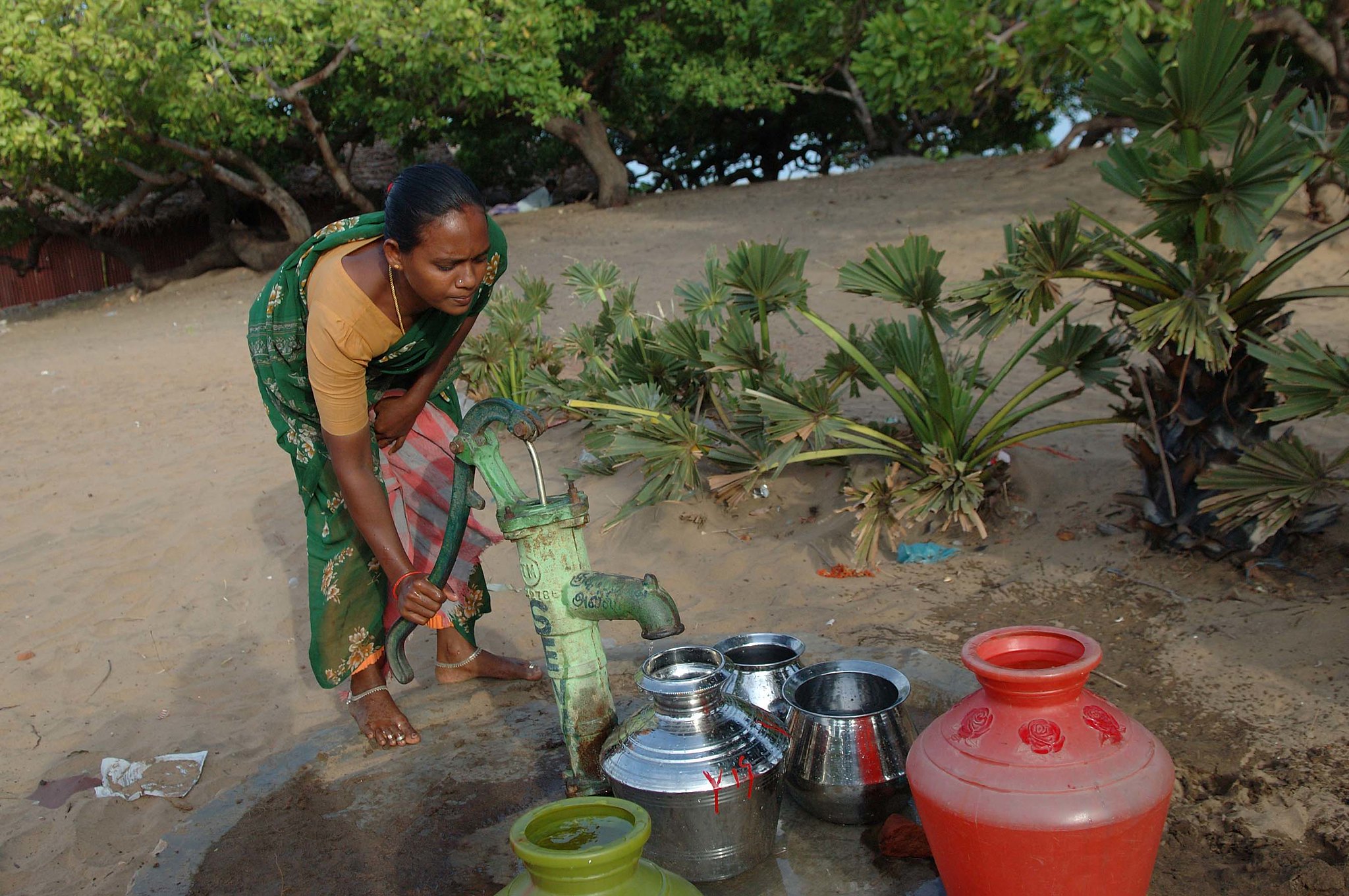
The framework on work statistics has been widely publicized over the years, particularly to data producers and policymakers, as it was designed to improve labour market and gender analysis. But little has been said to data users interested in international comparisons. Until now. Here is the ILOSTAT solution to handling the impacts of revised definitions occurring on different schedules across the globe.