
Digital progress without inclusion leaves workers behind

On World Telecommunication & Information Society Day, we celebrate the progress made in extending access to key digital resources, while also recognizing the risks and challenges of digitalization, particularly in the world of work.
Measuring progress on labour rights

Sustainable Development Goal indicator 8.8.2 sheds light on the state of freedom of association and the effective recognition of the right to collective bargaining
The right to occupational safety and health: Still unrealized

On this World Day for Safety and Health at Work, we analyse the remaining gap to realize this fundamental right.
The role of communication and dissemination in fulfilling the potential of gender-relevant work statistics
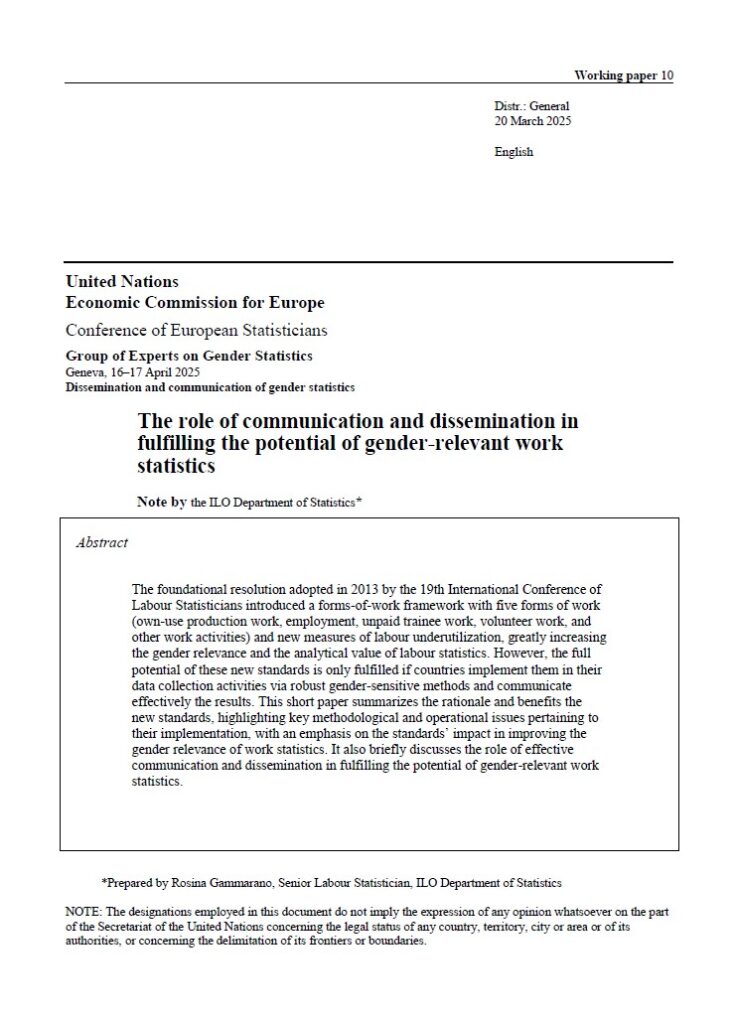
The 2013 ICLS resolution introduced a new forms-of-work framework and labour underutilization measures that significantly strengthened the gender relevance of labour statistics. This paper examines the rationale behind these standards, key challenges in their implementation, and the role of communication in maximizing their impact.
Happiness: a key metric to understanding decent work

On the International Day of Happiness, we underscore the importance of integrating happiness measurement into our understanding of decent work and the wellbeing of workers, employers, and societies.
Women and the economy: 30 years after the Beijing Declaration

World Employment and Social Outlook: Trends 2025

The WESO Trends 2025 report provides an in-depth analysis of global labour market trends, highlighting the impacts of slowing economic recovery, persistent youth unemployment, and gender disparities. It examines the structural challenges facing workers worldwide and offers insights into regional and global patterns shaping the future of work.
ILO global estimates on international migrants in the labour force
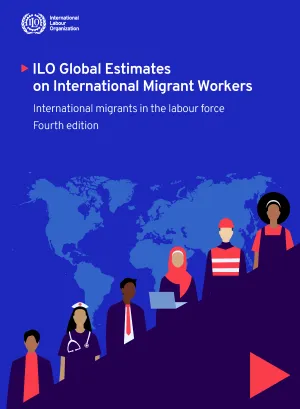
The report offers a thorough analysis of international migrants’ participation in the global labour force. It addresses key challenges while providing regional estimates highlighting the diverse dynamics of labour migration.
Constant turbulence: employment in civil aviation

The aviation sector has continuously evolved over the years, shaped by both long-term developments and short-term shocks. Data insights from the ILO suggest that the sector is characterized by ‘turbulence’ brought about by highly fluctuating levels and a shifting structure of employment, persistent gender imbalances, and other decent work challenges, all of which are linked to the cyclical and competitive nature of the industry.
Global Wage Report 2024-25: Is wage inequality decreasing globally?

The Global Wage Report 2024-25, provides a detailed look at wage trends around the world and in different regions, highlighting changes in wage inequality and real wage growth. It explores key challenges workers face globally and sheds light on patterns of income differences between and within countries.