The 2030 Agenda for Sustainable Development relies on timely, comparable statistics to monitor progress across its goals and targets. The ILO is the custodian agency for 14 labour-related SDG indicators under five goals and supports countries in producing the labour statistics used for global SDG reporting.
Data catalogue
|
▸
Employment
7 tables
|
||
| SDG indicator 5.5.2 - Proportion of women in senior and middle management positions (%) | Annual | |
| SDG indicator 5.5.2 - Proportion of women in managerial positions (%) | Annual | |
| SDG indicator 5.5.2 - Proportion of women in senior and middle management positions -- 19th ICLS (%) | Annual | |
| SDG indicator 5.5.2 - Proportion of women in managerial positions -- 19th ICLS (%) | Annual | |
| SDG indicator 8.b.1: Existence of a developed and operationalized national strategy for youth employment | Annual | |
| SDG indicator 9.2.2 - Manufacturing employment as a proportion of total employment (%) | Annual | |
| SDG indicator 9.2.2 - Manufacturing employment as a proportion of total employment -- 19th ICLS (%) | Annual | |
|
▸
Unemployment
4 tables
|
||
| SDG indicator 8.5.2 - Unemployment rate by sex and age (%) | Annual | |
| SDG indicator 8.5.2 - Unemployment rate by sex and age -- 19th ICLS (%) | Annual | |
| SDG indicator 8.5.2 - Unemployment rate by sex and disability status (%) | Annual | |
| SDG indicator 8.5.2 - Unemployment rate by sex and disability status -- 19th ICLS (%) | Annual | |
|
▸
Other measures of labour underutilization
1 table
|
||
| SDG indicator 8.6.1 - Proportion of youth (aged 15-24 years) not in education, employment or training by sex (%) | Annual | |
|
▸
Informal economy
2 tables
|
||
| SDG indicator 8.3.1 - Proportion of informal employment in total employment by sex and economic activity (%) | Annual | |
| SDG indicator 8.3.1 - Proportion of informal employment in total employment by sex and economic activity -- 19th ICLS (%) | Annual | |
|
▸
Earnings
1 table
|
||
| SDG indicator 8.5.1 - Average hourly earnings of employees by sex (local currency) | Annual | |
|
▸
Income and pay inequality
1 table
|
||
| SDG indicator 10.4.1 - Labour income share as a percent of GDP (%) | Annual | |
|
▸
Labour productivity
2 tables
|
||
| SDG indicator 8.2.1 - Annual growth rate of output per worker (GDP constant 2015 US $) (%) | Annual | |
| SDG indicator 8.2.1 - Annual growth rate of output per worker (GDP constant 2021 international $ at PPP) (%) | Annual | |
|
▸
Working poverty
1 table
|
||
| SDG indicator 1.1.1 - Working poverty rate by sex and age (percentage of employed living below US$3 PPP) (%) | Annual | |
|
▸
Social protection
1 table
|
||
| SDG indicator 1.3.1 - Proportion of population covered by social protection floors/systems by sex and benefits schemes (%) | Annual | |
|
▸
Occupational injuries
2 tables
|
||
| SDG indicator 8.8.1 - Non-fatal occupational injuries per 100'000 workers by sex and migrant status | Annual | |
| SDG indicator 8.8.1 - Fatal occupational injuries per 100'000 workers by sex and migrant status | Annual | |
|
▸
Industrial relations
1 table
|
||
| SDG indicator 8.8.2 - Level of national compliance with labour rights (freedom of association and collective bargaining) | Annual | |
|
▸
Child labour
2 tables
|
||
| SDG indicator 8.7.1 - Proportion of children engaged in economic activity and household chores by sex and age (%) | Annual | |
| SDG indicator 8.7.1 - Proportion of children engaged in economic activity by sex and age (%) | Annual | |
|
▸
SDG Labour Market Indicators (ILOSDG)
25 tables
|
||
| SDG indicator 1.1.1 - Working poverty rate by sex and age (percentage of employed living below US$3 PPP) (%) | Annual | |
| SDG indicator 1.3.1 - Proportion of population covered by social protection floors/systems by sex and benefits schemes (%) | Annual | |
| SDG indicator 5.5.2 - Proportion of women in senior and middle management positions (%) | Annual | |
| SDG indicator 5.5.2 - Proportion of women in managerial positions (%) | Annual | |
| SDG indicator 5.5.2 - Proportion of women in senior and middle management positions -- 19th ICLS (%) | Annual | |
| SDG indicator 5.5.2 - Proportion of women in managerial positions -- 19th ICLS (%) | Annual | |
| SDG indicator 8.2.1 - Annual growth rate of output per worker (GDP constant 2015 US $) (%) | Annual | |
| SDG indicator 8.2.1 - Annual growth rate of output per worker (GDP constant 2021 international $ at PPP) (%) | Annual | |
| SDG indicator 8.3.1 - Proportion of informal employment in total employment by sex and economic activity (%) | Annual | |
| SDG indicator 8.3.1 - Proportion of informal employment in total employment by sex and economic activity -- 19th ICLS (%) | Annual | |
| SDG indicator 8.5.1 - Average hourly earnings of employees by sex (local currency) | Annual | |
| SDG indicator 8.5.2 - Unemployment rate by sex and age (%) | Annual | |
| SDG indicator 8.5.2 - Unemployment rate by sex and age -- 19th ICLS (%) | Annual | |
| SDG indicator 8.5.2 - Unemployment rate by sex and disability status (%) | Annual | |
| SDG indicator 8.5.2 - Unemployment rate by sex and disability status -- 19th ICLS (%) | Annual | |
| SDG indicator 8.6.1 - Proportion of youth (aged 15-24 years) not in education, employment or training by sex (%) | Annual | |
| SDG indicator 8.7.1 - Proportion of children engaged in economic activity and household chores by sex and age (%) | Annual | |
| SDG indicator 8.7.1 - Proportion of children engaged in economic activity by sex and age (%) | Annual | |
| SDG indicator 8.8.1 - Non-fatal occupational injuries per 100'000 workers by sex and migrant status | Annual | |
| SDG indicator 8.8.1 - Fatal occupational injuries per 100'000 workers by sex and migrant status | Annual | |
| SDG indicator 8.8.2 - Level of national compliance with labour rights (freedom of association and collective bargaining) | Annual | |
| SDG indicator 8.b.1: Existence of a developed and operationalized national strategy for youth employment | Annual | |
| SDG indicator 9.2.2 - Manufacturing employment as a proportion of total employment (%) | Annual | |
| SDG indicator 9.2.2 - Manufacturing employment as a proportion of total employment -- 19th ICLS (%) | Annual | |
| SDG indicator 10.4.1 - Labour income share as a percent of GDP (%) | Annual | |
|
▸
Working poverty rate (SDG 1.1.1)
1 table
|
||
| SDG indicator 1.1.1 - Working poverty rate by sex and age (percentage of employed living below US$3 PPP) (%) | Annual | |
|
▸
Social protection coverage rate (SDG 1.3.1)
1 table
|
||
| SDG indicator 1.3.1 - Proportion of population covered by social protection floors/systems by sex and benefits schemes (%) | Annual | |
|
▸
Proportion of women in management (SDG 5.5.2)
4 tables
|
||
| SDG indicator 5.5.2 - Proportion of women in senior and middle management positions (%) | Annual | |
| SDG indicator 5.5.2 - Proportion of women in managerial positions (%) | Annual | |
| SDG indicator 5.5.2 - Proportion of women in senior and middle management positions -- 19th ICLS (%) | Annual | |
| SDG indicator 5.5.2 - Proportion of women in managerial positions -- 19th ICLS (%) | Annual | |
|
▸
Labour productivity growth rate (SDG 8.2.1)
2 tables
|
||
| SDG indicator 8.2.1 - Annual growth rate of output per worker (GDP constant 2015 US $) (%) | Annual | |
| SDG indicator 8.2.1 - Annual growth rate of output per worker (GDP constant 2021 international $ at PPP) (%) | Annual | |
|
▸
Informal employment rate (SDG 8.3.1)
2 tables
|
||
| SDG indicator 8.3.1 - Proportion of informal employment in total employment by sex and economic activity (%) | Annual | |
| SDG indicator 8.3.1 - Proportion of informal employment in total employment by sex and economic activity -- 19th ICLS (%) | Annual | |
|
▸
Average hourly earnings (SDG 8.5.1)
1 table
|
||
| SDG indicator 8.5.1 - Average hourly earnings of employees by sex (local currency) | Annual | |
|
▸
Unemployment rate (SDG 8.5.2)
4 tables
|
||
| SDG indicator 8.5.2 - Unemployment rate by sex and age (%) | Annual | |
| SDG indicator 8.5.2 - Unemployment rate by sex and age -- 19th ICLS (%) | Annual | |
| SDG indicator 8.5.2 - Unemployment rate by sex and disability status (%) | Annual | |
| SDG indicator 8.5.2 - Unemployment rate by sex and disability status -- 19th ICLS (%) | Annual | |
|
▸
Youth NEET rate (SDG 8.6.1)
1 table
|
||
| SDG indicator 8.6.1 - Proportion of youth (aged 15-24 years) not in education, employment or training by sex (%) | Annual | |
|
▸
Child labour rate (SDG 8.7.1)
2 tables
|
||
| SDG indicator 8.7.1 - Proportion of children engaged in economic activity and household chores by sex and age (%) | Annual | |
| SDG indicator 8.7.1 - Proportion of children engaged in economic activity by sex and age (%) | Annual | |
|
▸
Incidence rate of occupational injuries (SDG 8.8.1)
2 tables
|
||
| SDG indicator 8.8.1 - Non-fatal occupational injuries per 100'000 workers by sex and migrant status | Annual | |
| SDG indicator 8.8.1 - Fatal occupational injuries per 100'000 workers by sex and migrant status | Annual | |
|
▸
National compliance with labour rights (SDG 8.8.2)
1 table
|
||
| SDG indicator 8.8.2 - Level of national compliance with labour rights (freedom of association and collective bargaining) | Annual | |
|
▸
National strategy for youth employment (SDG 8.b.1)
1 table
|
||
| SDG indicator 8.b.1: Existence of a developed and operationalized national strategy for youth employment | Annual | |
|
▸
Proportion of manufacturing employment (SDG 9.2.2)
2 tables
|
||
| SDG indicator 9.2.2 - Manufacturing employment as a proportion of total employment (%) | Annual | |
| SDG indicator 9.2.2 - Manufacturing employment as a proportion of total employment -- 19th ICLS (%) | Annual | |
|
▸
Labour income share (SDG 10.4.1)
1 table
|
||
| SDG indicator 10.4.1 - Labour income share as a percent of GDP (%) | Annual | |
Latest figures
What are the SDGs?
The 2030 Agenda and the Sustainable Development Goals (SDGs) were adopted in 2015 by the United Nations General Assembly. The 17 SDGs are a universal call to action to end poverty, protect the planet, and ensure that all people enjoy peace and prosperity. They cover a broad range of social and economic development issues, including poverty, hunger, health, education, climate change, gender equality, water, sanitation, energy, the environment and social justice, with a focus on the most vulnerable and a commitment that “no one will be left behind.”
The role of decent work
Goal 8, which aims to “promote sustained, inclusive and sustainable economic growth, full and productive employment and decent work for all”, highlights the importance of decent work in achieving sustainable development.
The role of statistics
The role of national statistical offices (NSOs)
High quality data (i.e., reliable, timely, consistent and comparable data) are required in order to measure and monitor progress towards the SDGs. NSOs play a pivotal role in the areas of data collection, coordination, reporting and validation of statistics for the SDGs. It is the responsibility of NSOs to provide statistics to international agencies such as the ILO to support the measurement of progress on SDGs. This includes identifying appropriate data sources and methodologies to produce the SDG indicators.
The role of the ILO Department of Statistics
The ILO contributes to five of 17 Goals. As custodian for 14 SDG indicators, the ILO is responsible for:
- Compiling national statistics from data producers
- Verifying country data and metadata and ensuring international comparability
- Developing international standards and methods for Tier 3 indicators
- Estimating global and regional aggregates
- Analysing data and identifying data gaps and key trends
- Reporting data and metadata to the UN annually and contributing to SDG progress reports
- Strengthening national capacity for producing high-quality data on SDG labour indicators
The ILO Department of Statistics is the focal point for all inputs provided to the UN Statistics Division, with key contributions from other departments and field offices.
Latest posts


Analytical publications
Note: Many publications are available only in English. If available in other languages, a new page will open displaying the options on the right.
Spotlight on SDG 8: The impact of marriage and children on labour market participation
This publication, drawing on a global dataset and new indicators developed by the ILO and UN Women, shows that women’s employment is shaped by domestic and caregiving responsibilities in ways that men’s is not.
Time to Act for SDG 8 : Integrating Decent Work, Sustained Growth and Environmental Integrity
The report seeks to improve understanding of SDG 8 at the empirical, conceptual and policy levels by: (a) charting empirical progress towards the 12 targets under SDG 8 and comparing performance across country income groups; (b) developing a conceptual mapping of dynamic interlinkages between SDG 8 targets and specific targets under other SDGs, and exploring on that basis major patterns of achievement in the various world regions; and (c) describing a positive spiral of policy interventions and institutional support that can enable countries to achieve SDG 8 by 2030.
Methods

Labour Market-Related SDG Indicators (ILOSDG database)
Concise description of concepts and definitions, uses, sources and limitations for labour market-related sustainable development indicators.
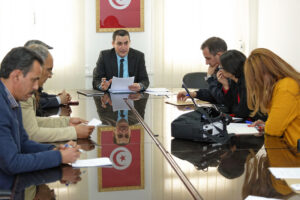
About SDG indicator 8.8.2
This page describes the methodology for SDG indicator 8.8.2, which measures the level of national compliance with freedom of association and the effective recognition of the right to collective bargaining for all ILO member states.

Resolution concerning the methodology of the SDG indicator 8.8.2 on labour rights (including amendments)
Adopted by the 20th ICLS (2018), this resolution sets an internationally agreed methodology to measure indicator SDG 8.8.2 on labour rights consistent with the Resolution adopted by the United Nations General Assembly on Work of the Statistical Commission pertaining to the 2030 Agenda for Sustainable Development (A/RES/71/313), Annex taken on 6 July 2017.
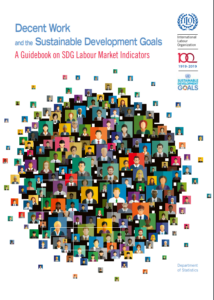
Decent Work and the Sustainable Development Goals: A Guidebook on SDG Labour Market Indicators
This Guidebook provides a detailed overview of the labour market indicators included in the Sustainable Development Goals Global Indicator Framework. It is intended to serve as a manual of best practices for calculating and interpreting the SDG labour market indicators, with a view to monitoring progress made at the national and international levels towards the achievement of the SDGs.