Historically, labour statistics have carried an inherent bias: employment (as defined in statistical standards adopted in 1982) used to include not only paid activities, but some unpaid activities such as subsistence farming as well. That is, the concept pooled together people with very different working situations and living conditions, while all other unpaid activities remained unmeasured (and thus, invisible to policymakers) for the most part. This broad employment definition was convenient for the measurement of labour input and productivity, but it hindered the accurate understanding of the amount and types of work performed by people. As employment was the base concept for any labour market analysis, this bias carried through to our understanding of working conditions and all work-related issues. The scale and nature of this bias depended on the country’s socio-economic context and measurement practices (in particular, the prevalence and measurement of subsistence farming).
In 2013, the 19th ICLS addressed this bias by adopting a resolution which expanded the scope of labour statistics to measure all work, both paid and unpaid. This foundational resolution:
- established the first international statistical definition of work (any activity to produce goods or provide services for use by others or for own use),
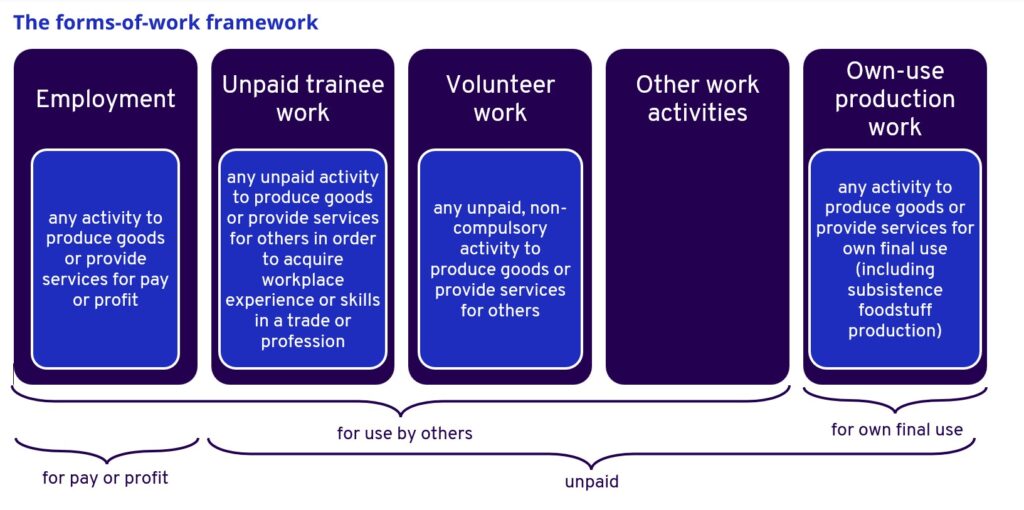
- introduced a forms-of-work framework with five forms of work (own-use production work, employment, unpaid trainee work, volunteer work, and other work activities),
- redefined employment more narrowly as work done for pay or profit (since unpaid activities are covered under other forms of work), and
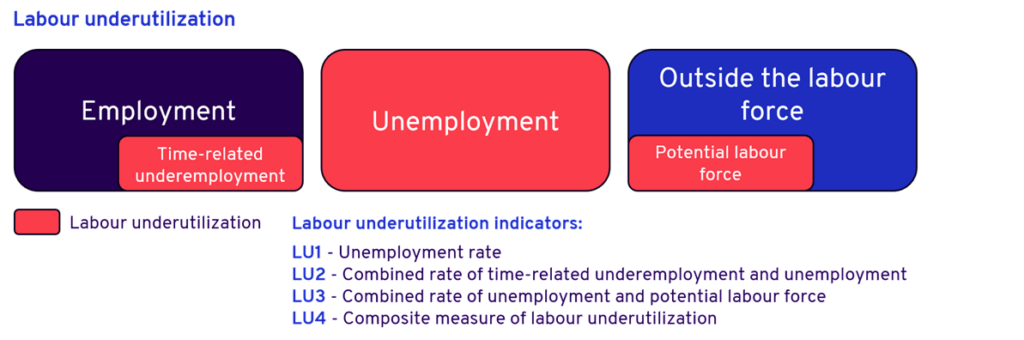
- improved the measurement of labour underutilization by introducing the concept of the potential labour force (people outside the labour force who are available or seeking employment), eliminating any possibility of relaxing the definition of unemployment (people not in employment but available and seeking), and presenting four complementary labour underutilization indicators (the unemployment rate being one of them).
This laid the foundation for improved work statistics globally, giving rise to notable knowledge gains for policymakers and labour market agents.
People may participate in several forms of work at once (or in none). The forms-of-work framework allows us to capture the different activities people do to sustain their livelihood and support their families and communities. This sheds light on people’s total work burden, highlighting important differences between different groups such as women and men, people in rural areas and urban areas, etc.
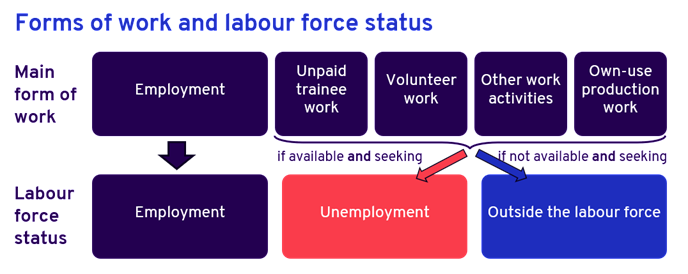
Additionally, people may be classified according to their labour force status (in employment, in unemployment, or outside the labour force, where the labour force comprises employment and unemployment).
Unemployed people are in a situation of labour underutilization whereby they have an explicit unmet need for employment, but labour underutilization covers also some people in employment (those who are in time-related underemployment) and some people outside the labour force (those who are in the potential labour force). To achieve a more complete understanding of labour underutilization, we need information on all these groups.
Incremental approach to standard setting
The 19th ICLS resolution set the foundation for improved work statistics by defining or redefining core concepts (such as work, employment, unemployment, or the potential labour force). Standards adopted by subsequent ICLS have built (and will continue to do so) on this core resolution to tackle specific priorities. Indeed, the 20th ICLS focussed on updating the classification of status in employment to align with the 19th ICLS standards and better capture diverse and changing work relationships (including the blurring boundary between paid employment and self-employment). The 21st ICLS addressed the measurement of the informal economy, providing operational definitions of key concepts related to informality aligned with 19th and 20th ICLS standards. The 22nd ICLS, to be held in 2028, will discuss standards on additional key topics including digital platform work and care work, again building on the base of earlier standards to provide an increasingly comprehensive and integrated framework of statistical standards on labour.
Implementation of the latest standards
The adoption of improved standards by the ICLS is not enough to guarantee better work statistics. In fact, the immense knowledge gains associated with the foundational 19th ICLS resolution only materialize if the standards are indeed implemented in national data collections via robust statistical methods and if the resulting statistics are disseminated and communicated to various audiences for their effective use.
In this sense, the rapidly increasing implementation rate of latest standards around the globe is good news, although the challenge remains to ensure that the data generated are effectively used to inform and evaluate policies. For this reason, the implementation of standards must not be seen as a methodological exercise alone, but rather a mix of technical, resourcing and communications efforts.
ILO tools and materials to support implementation
The ILO has created enough tools and materials to guide National Statistical Offices through the entire implementation process, from the early survey planning stages to the communication and dissemination of results.
Implementation levels around the world
Since the adoption of the 19th ICLS resolution in 2013 and especially once ILO guidance based on research and pilot tests was ready, its implementation rate has been rapidly growing, to the point that it can now be considered the norm around the world. Given that they are more recent, the resolutions adopted by the 20th ICLS in 2018 and by the 21st ICLS in 2023 are not as widely implemented yet, but their implementation rates are also quickly rising.
In addition, an increasing number of countries are using the ILO model questionnaire in their LFS with benefits including better data quality, reduced implementation time, lower development and processing costs, and improved harmonization and comparability across countries.
Impact of latest standards on key indicators
The implementation of latest standards greatly increases the analytical relevance of work statistics, enabling a much more detailed and comprehensive view of the world of work. However, the impact of this implementation, especially on some key long-standing labour market indicators, is not always easily understood. It is therefore crucial to accompany the implementation efforts with an effective dissemination and communication strategy.
Impact of the narrowing of the employment definition
Perhaps the most significant impact of the implementation of 19th ICLS standards on key labour market indicators is related to the narrowing of the employment definition.
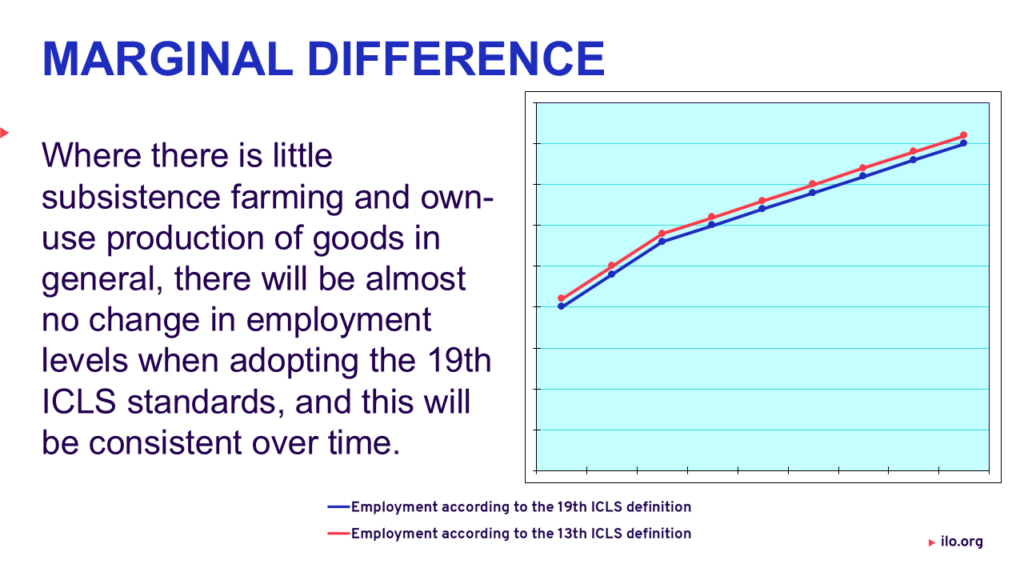
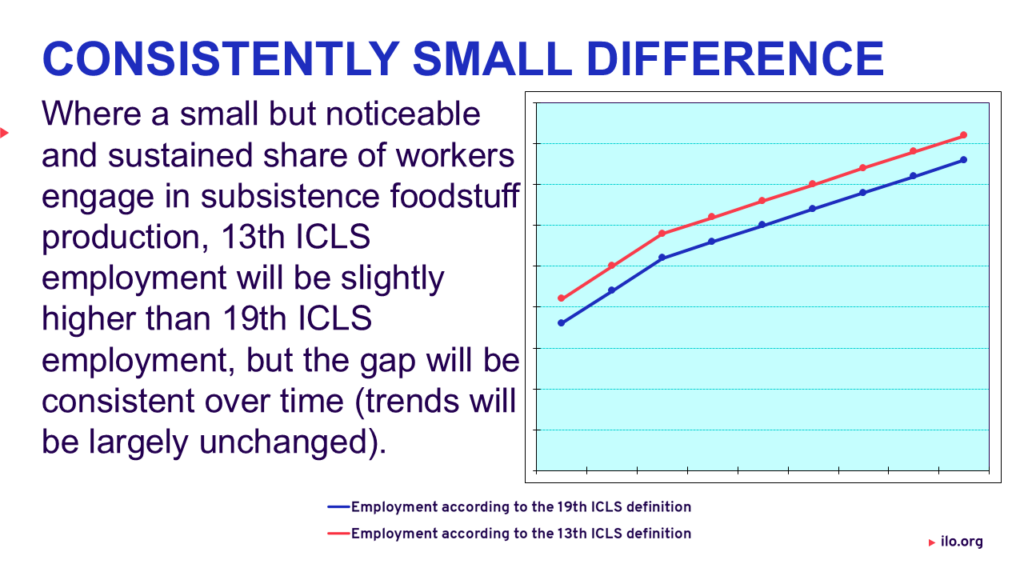
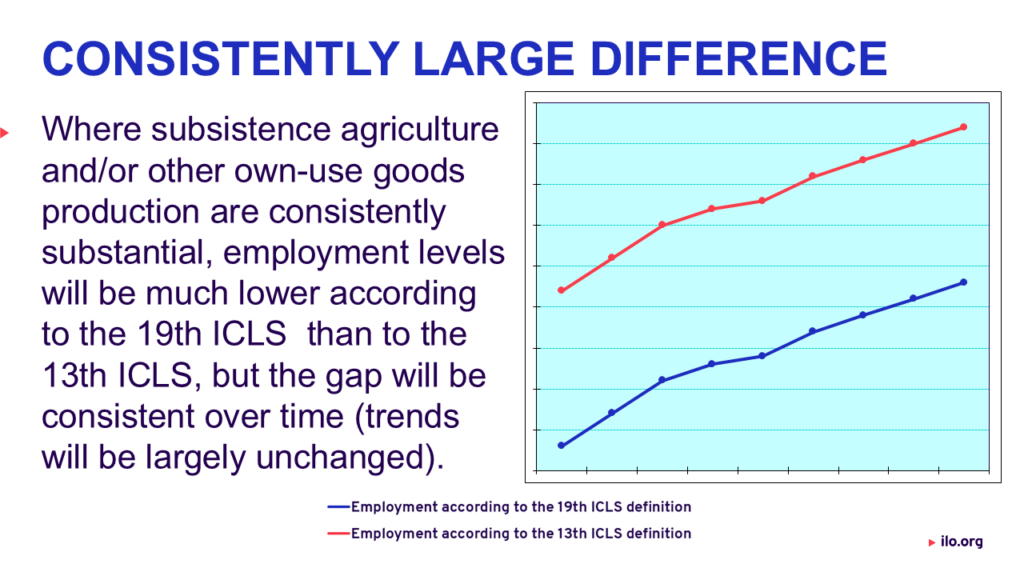
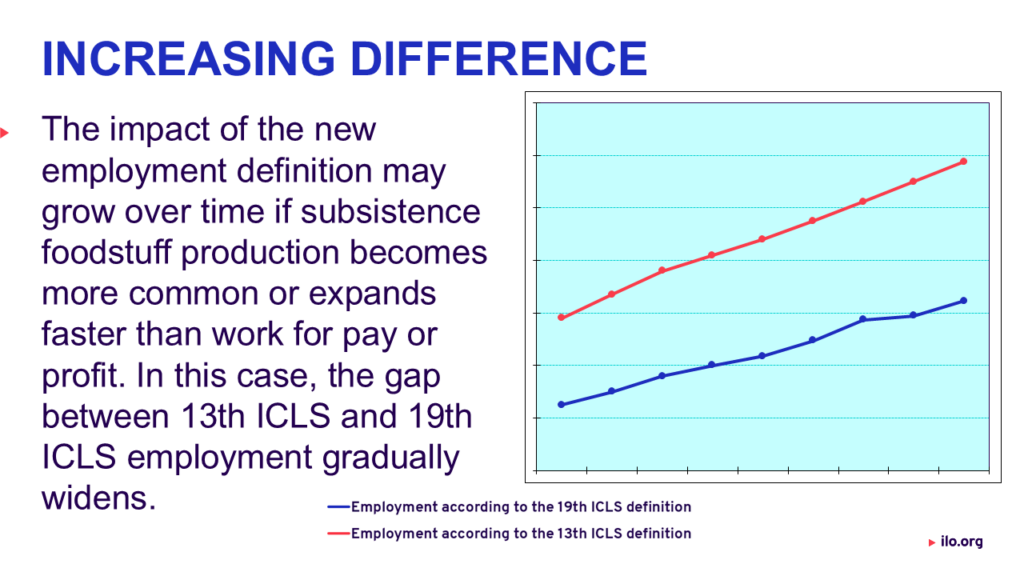
Evidently, the impact will be stronger in contexts where the activities previously considered employment and no longer so under current standards (such as subsistence farming) are common, and it will be marginal where these activities are scarce.
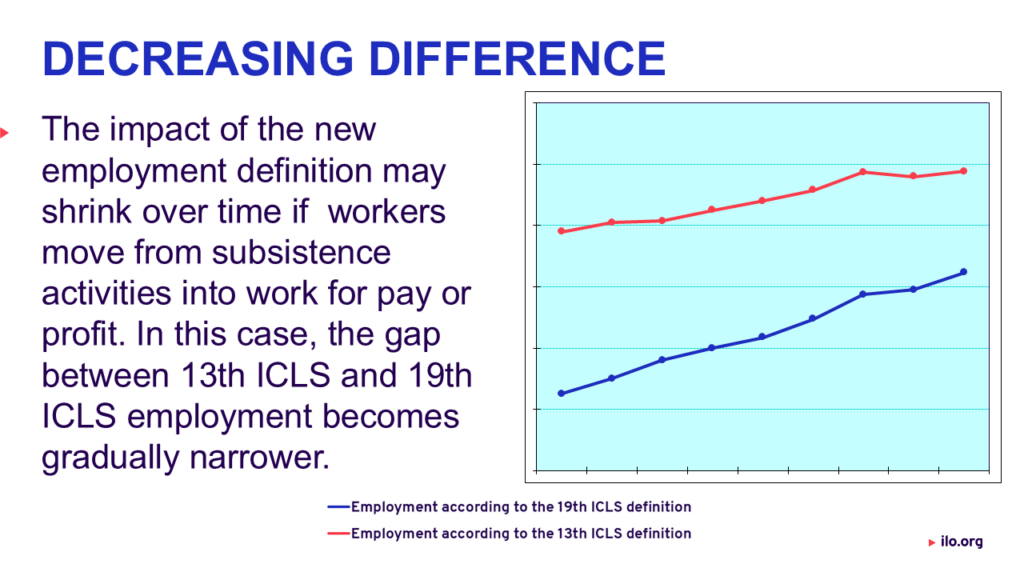
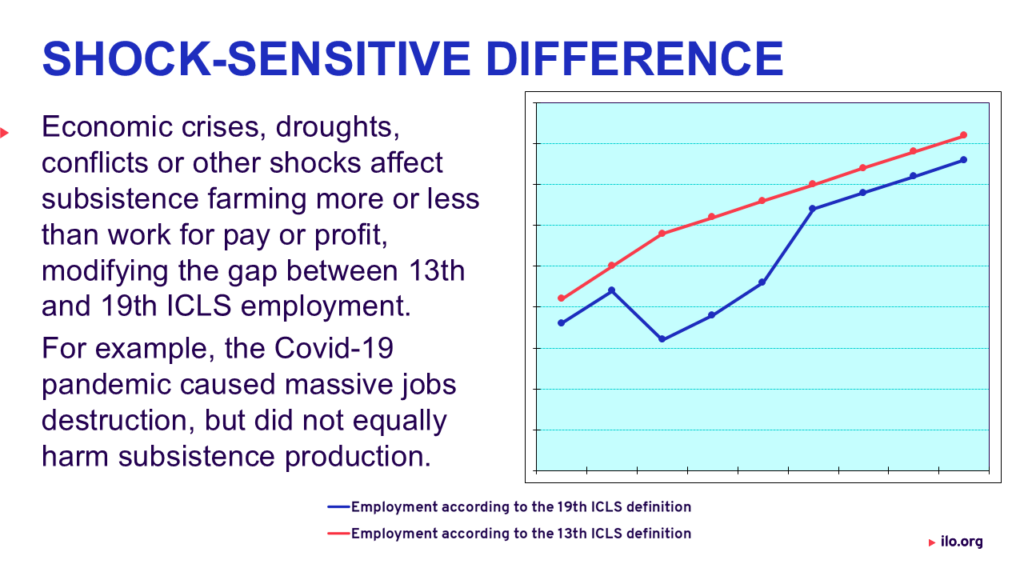
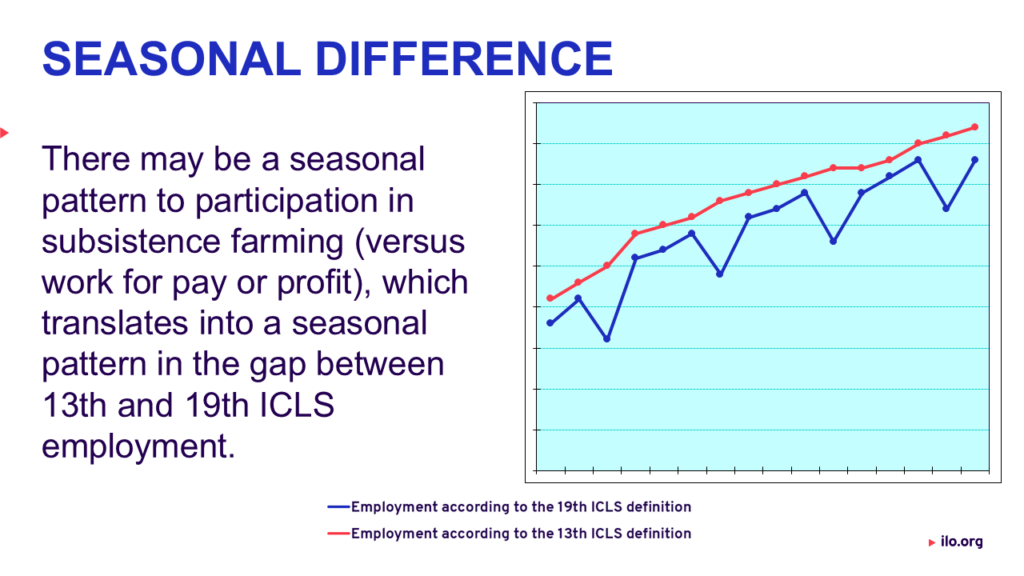
There are several possible scenarios for the impact of the new employment definition on employment figures, and specifically, for the difference between employment levels according to the 13th and the 19th ICLS definitions, as shown below.
Other changes implemented at the same time as the change in the employment definition (such as changes in sampling and questionnaire design) will also have an impact. The ILO recommends careful planning and implementation of changes, and the provision of good information to users and stakeholders at different stages of the implementation process to ensure appropriate interpretation of changes and their impact on estimates.
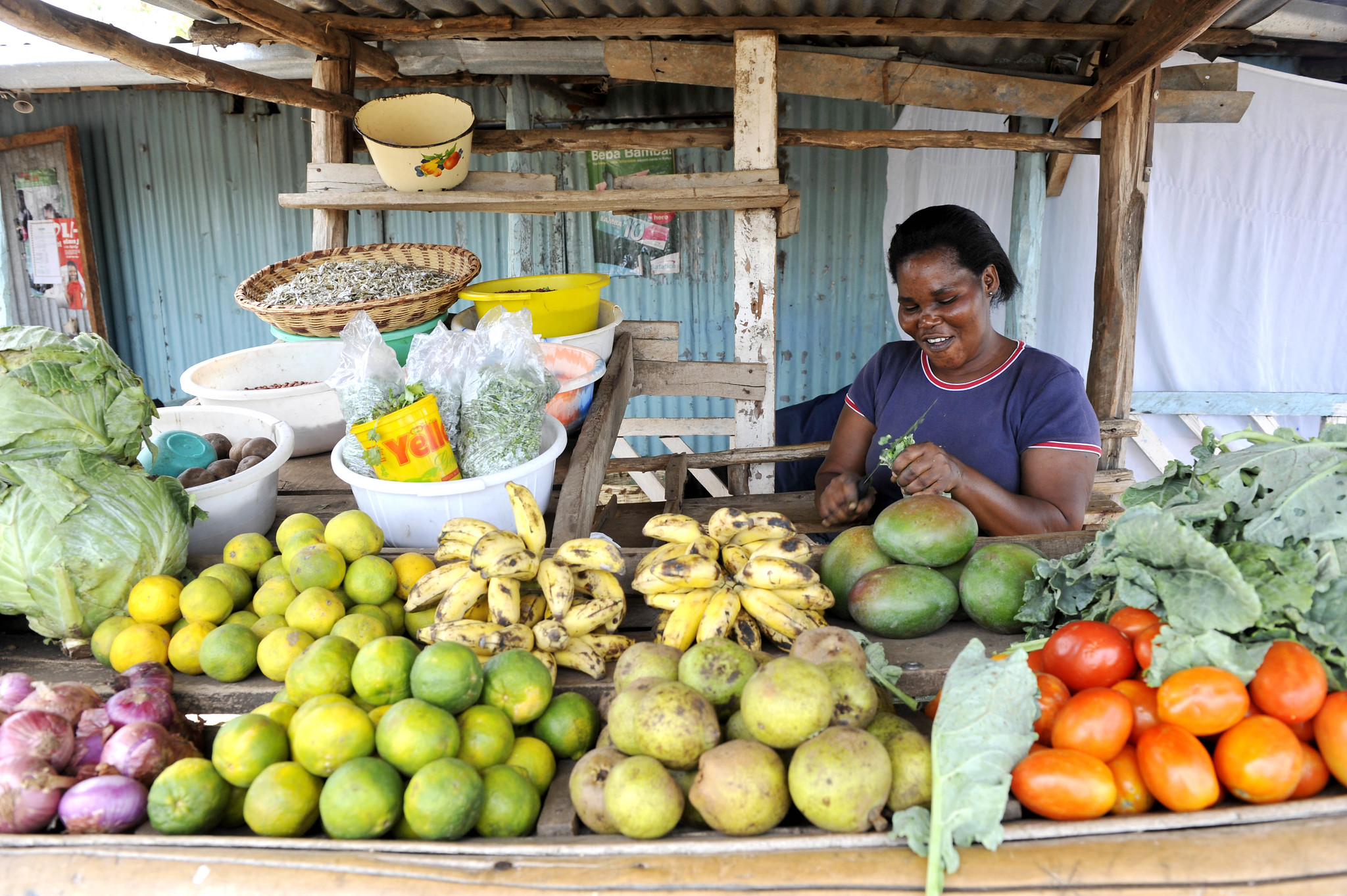
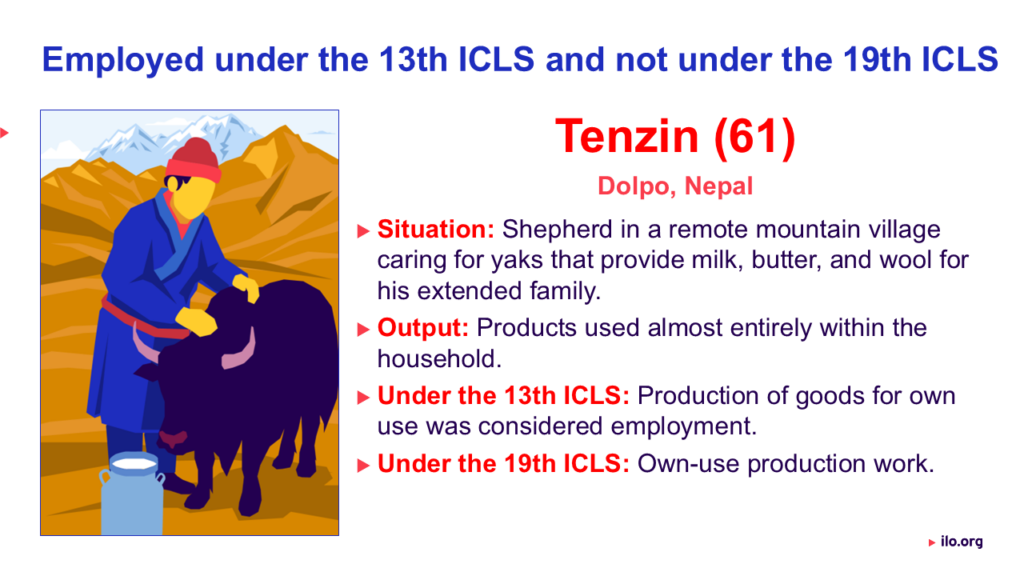
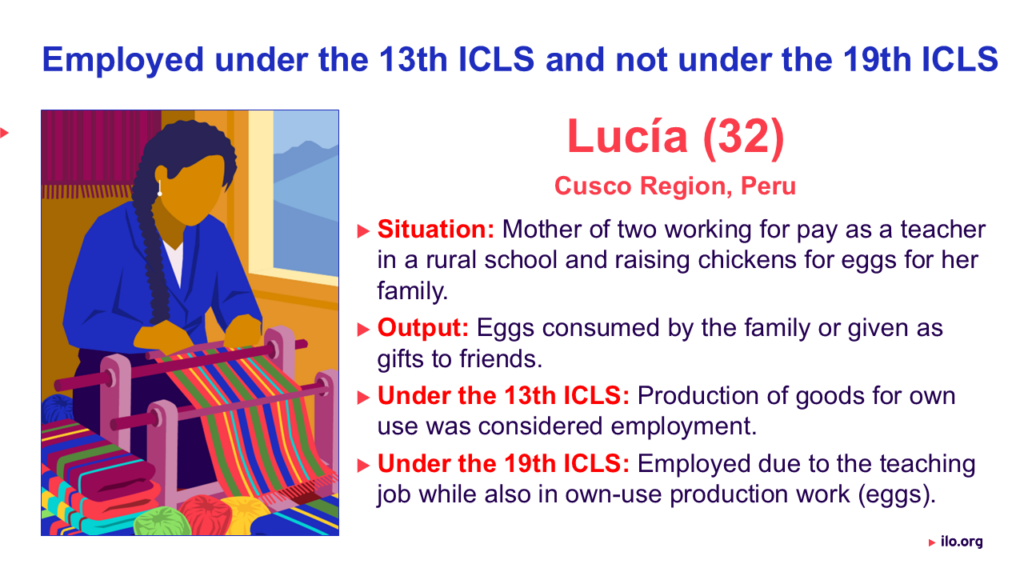
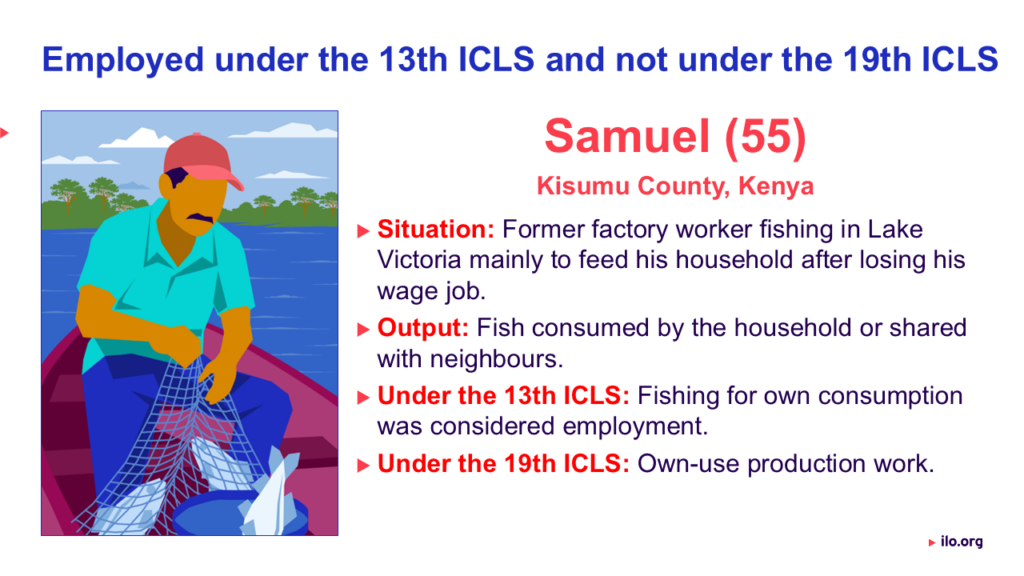
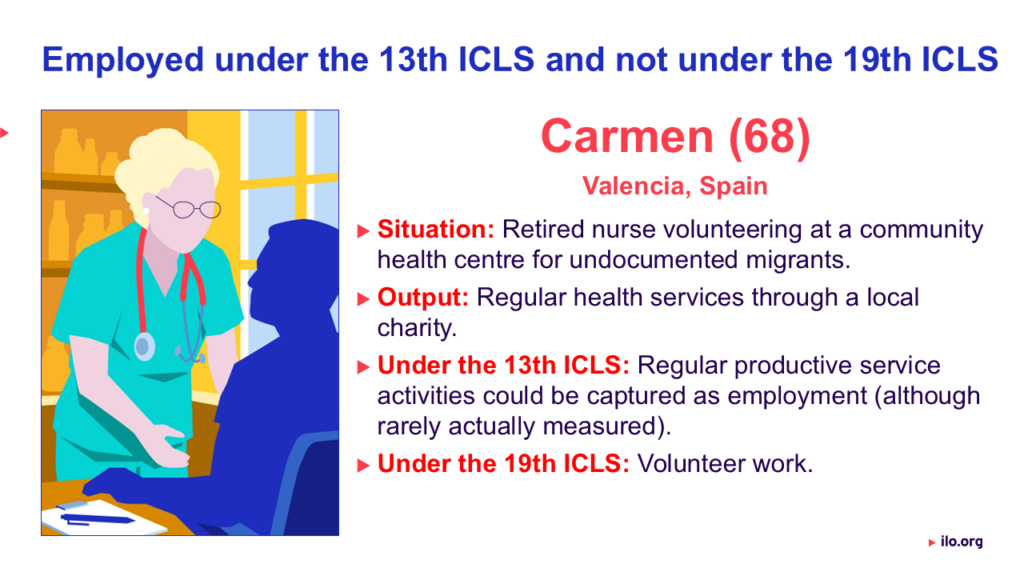
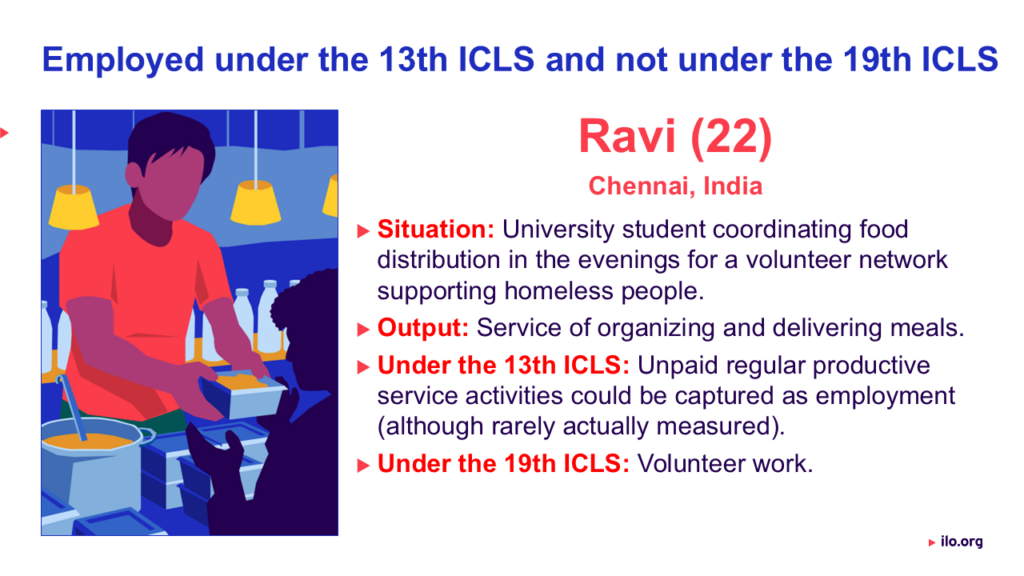
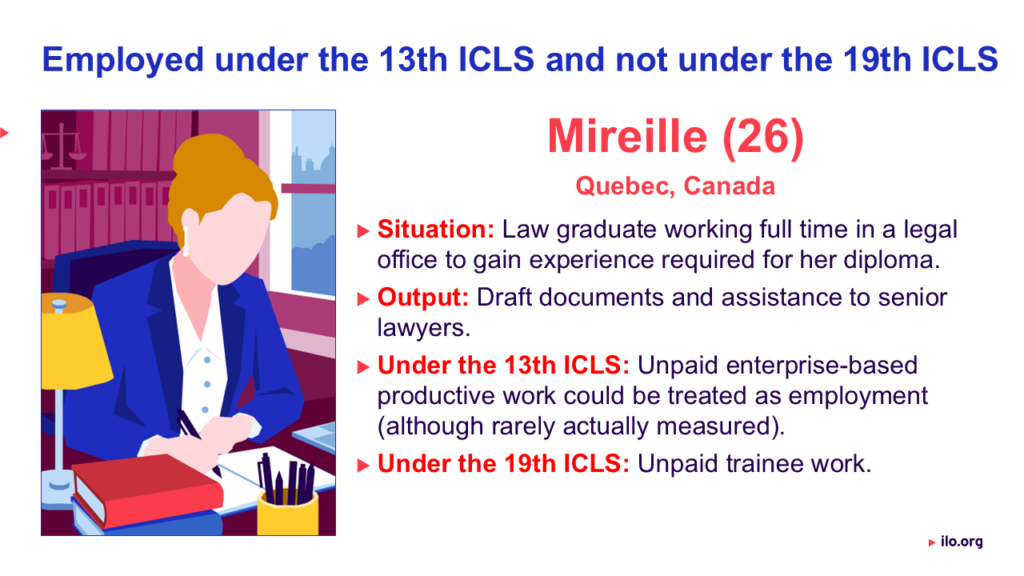
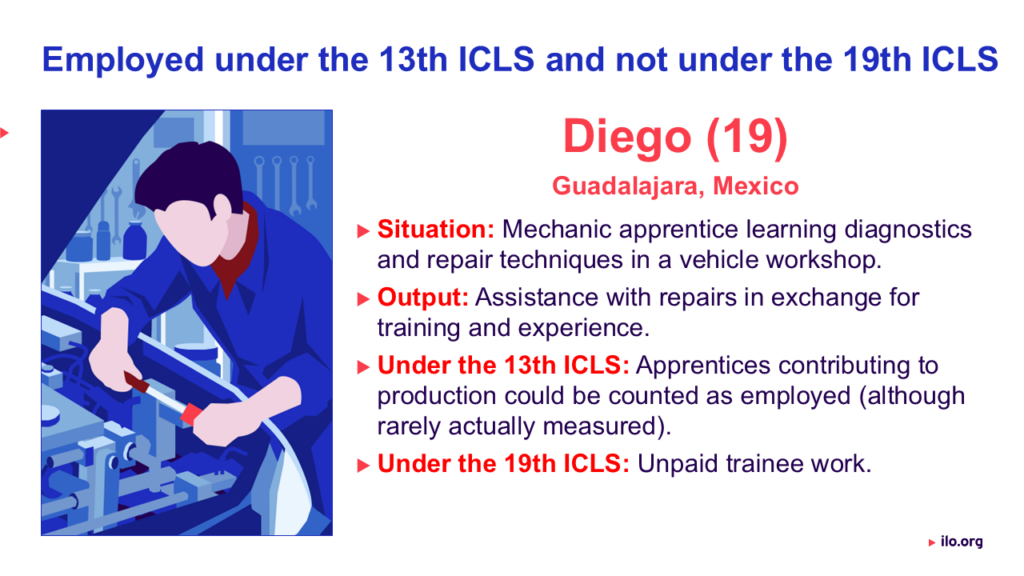
The 19th ICLS standards enable a better understanding of the working and living conditions of people in diverse situations, by casting light, separately, on those working for pay or profit (in employment) and on those participating mainly in unpaid work. This separate measurement makes more visible the situation of people in activities covered by the old employment definition and not by the new employment definition. The illustrative examples below showcase different plausible worker profiles in these situations.
Visualization tool on the impact of latest statistical standards
Our interactive visualization tool eases the understanding of the impact of the new standards by showing the differences in some key indicators according to old and new standards for a range of countries with different labour market conditions and local contexts.
Implementing the latest statistical standards is an essential step, but implementation alone does not unlock their full potential. The real value of the new standards comes from putting the richer information they generate in the hands of policymakers, researchers, social partners and other data users, and ensuring it is effectively used. Better evidence can improve research, policymaking and labour market decisions, ultimately having a concrete impact on people and their well-being.
Effective dissemination and communication are therefore an integral part of implementation efforts, helping turn improved measurement into better evidence for policy, research, and the public debate.
The new standards enable the production of a wealth of valuable data, going well beyond traditional headline labour market indicators and covering participation in different forms of paid and unpaid work, simultaneous participation in multiple forms of work, different dimensions of labour underutilization and labour market attachment, and the characteristics of different work relationships and the informal economy, among many others. Their implementation therefore creates opportunities to develop and disseminate new indicators and breakdowns that were not previously possible, providing a much richer and more nuanced picture of the world of work. The joint use of complementary indicators is particularly important, since no single measure can adequately capture all the dimensions of any given world-of-work phenomenon.
Unlocking this potential also means ensuring that the new data cast light on the situation of different population groups and address the policy questions that matter most in each national context. Appropriate data disaggregation can reveal differences that aggregate indicators conceal and support more targeted analysis and policymaking.
The true success of the new standards lies ultimately on the use of the knowledge gains generated to deepen our understanding of the world of work and inform better policies and decisions.