
Dataviz: Global Employment Trends for Youth 2026

The GET for Youth report’s dataviz presents global, regional and national data on youth labour markets, drawing on ILO modelled estimates at the global and regional levels for youth aged 15–24 and country-reported statistics for youth aged 15–29.
Dataviz
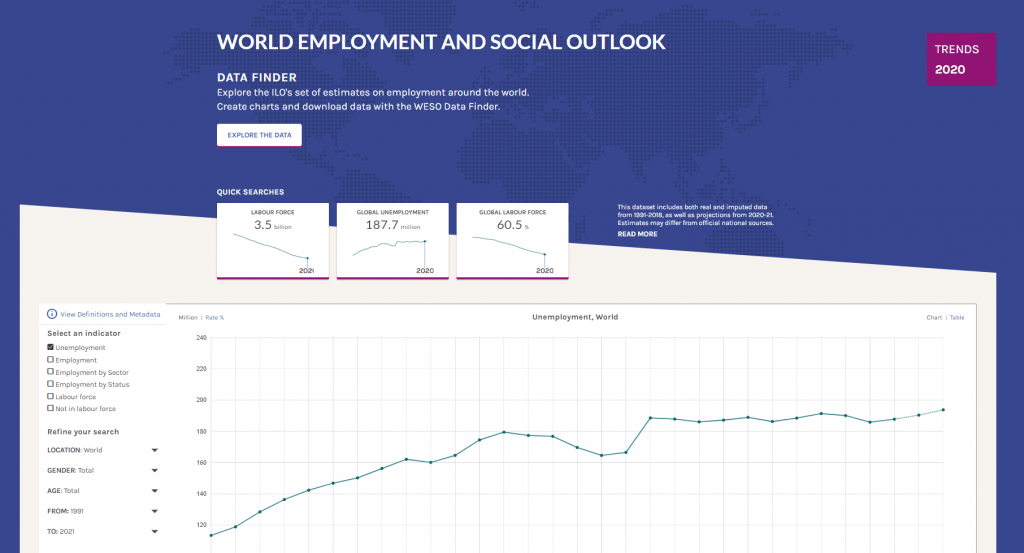
Explore and visualize data from ILO reports. This includes special data collections which may not be available in ILOSTAT databases.
ILO global estimates on international migrants in the labour force: Figures at a glance
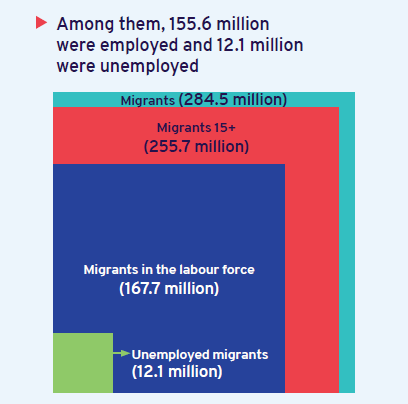
See the headline results from the latest edition of the ILO modelled estimates for a quick overview of global and regional findings.
Estimation methodology – ILO Modelled Estimates of International Migrants in the Labour Force
This note presents an overview of the technical foundations of the estimation methodology. It describes the models used, outlines the sources of input data and summarizes the approaches applied to assess the quality of the estimates. Where available, data based on foreign-born population as international migrants were used as input in the models.
Dataviz: Employment and Social Trends 2026

The WESO report’s dataviz presents the underlying ILO estimates used to examine the state of global labour markets, highlighting stable headline employment alongside stalled progress in job quality and widening inequalities. Indicators cover the labour force, employment, labour underutilization and working poverty.
Women with young children have much lower labour force participation rates
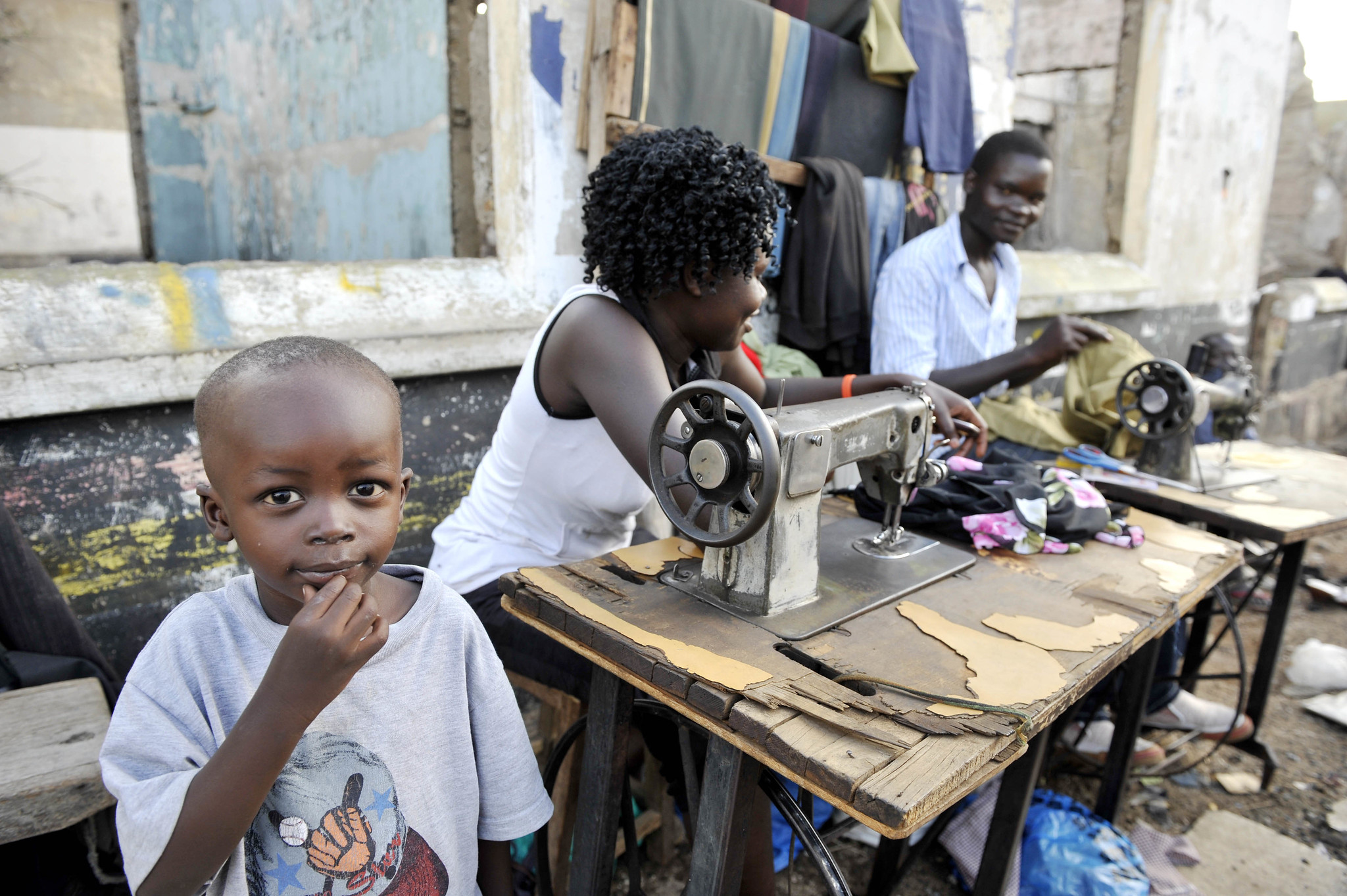
The disproportionate undertaking of childcare responsibilities by women explains a significant portion of the gender gap in labour force participation.